Calluses and Hard Skin on the Feet: Professional Treatment
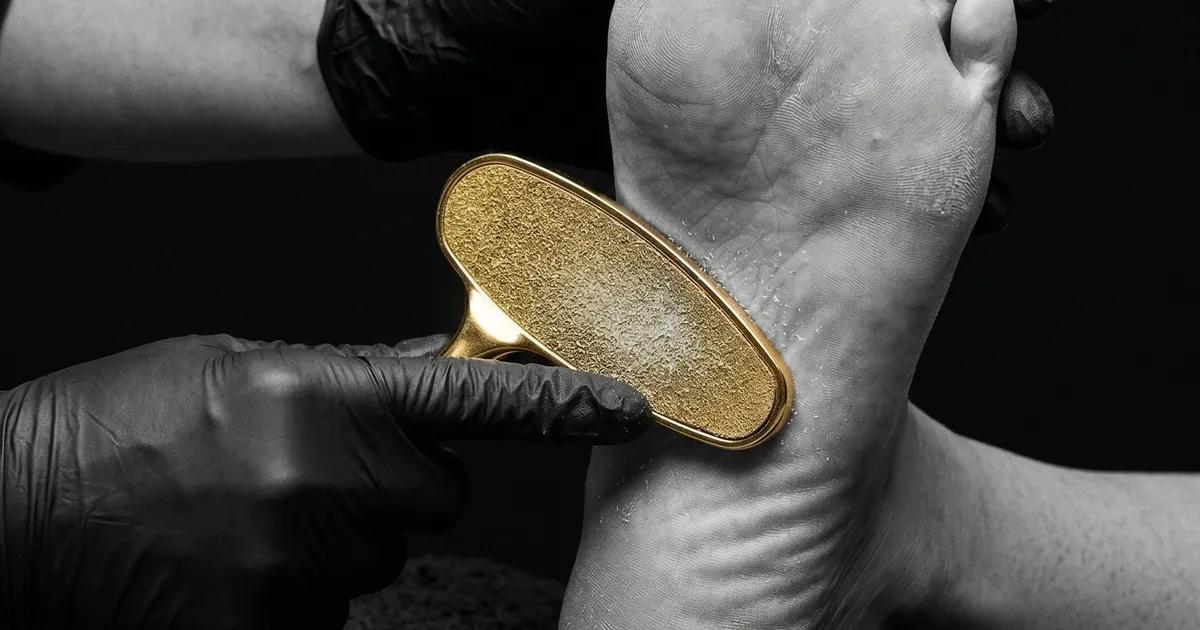
Calluses and hard skin on the feet are thickenings of the cornified layer of the skin produced by the body as a response to friction or repeated pressure on the same area.
Calluses and hard skin on the feet are thickenings of the cornified layer of the skin produced by the body as a response to friction or repeated pressure on the same area. According to the American Podiatric Medical Association, approximately 77% of adults experience some form of callus during their lifetime. A professional pedicure is the most effective and safest approach for removing them without damaging the surrounding healthy tissue or making the problem worse in the medium term.
What calluses and hard skin are and why they appear
Calluses and hard skin are areas of plantar hyperkeratosis: thickenings of the cornified layer that the skin produces as a defence mechanism against continuous rubbing or load-bearing. Repeated pressure activates accelerated keratin production, forming dense layers that can reach between 2 and 5 mm in thickness. On the heels, the skin can become up to 50 times thicker than in areas with no mechanical load. This process is involuntary and, in principle, protective; the problem arises when the cornified layers accumulate excessively and cause pain, cracking and difficulty walking. Plantar hyperkeratosis is the clinical term for this condition when it affects the sole of the foot in a generalised way.
Difference between a callus and hard skin
A callus (heloma) is a thickening of the skin with a central core of compact keratin oriented inwards towards the tissue. That core presses on the nerve endings and causes a characteristic sharp, localised pain. Hard skin, by contrast, is a diffuse, uniform thickening without a central core, appearing mainly on the heels, metatarsals and weight-bearing areas of the sole. Calluses tend to form between the toes or on their sides; hard skin on the surfaces bearing the greatest pressure. This distinction is clinically relevant because the technical approach for a callus with a core differs from the reduction of superficial hard skin.
Main causes of plantar hyperkeratosis
Unsupportive footwear is the most frequent cause: high heels, narrow toe boxes and insufficient cushioning concentrate pressure on specific areas of the foot. Standing for many hours, exercising on hard surfaces or walking barefoot on abrasive ground also contribute. Biomechanical factors -- flat feet, high arches, overpronation or supination -- redistribute the load unevenly and accelerate localised keratinisation. Professional experience in the treatment room shows that cracked heels worsen especially in summer, when open footwear exposes the foot to dehydration and direct contact with hot, abrasive surfaces.
Risks of removing calluses and hard skin at home
Attempting to remove calluses and hard skin without specific training carries risks that go beyond mere ineffectiveness. Using callus-shaver blades, very abrasive files or high-concentration salicylic acid patches without proper guidance can break through the hardened tissue and injure the healthy dermis, opening the door to bacterial infection. Direct observation in the beauty treatment room confirms that micro-wounds caused by self-treatment are one of the most common concerns, especially for people with diabetes or venous insufficiency, for whom any foot wound can lead to serious complications. Furthermore, removing only the superficial layers without addressing the core of the callus does not resolve the problem: the callosity reappears within weeks and may harden further in response to the irritating stimulus.
Over-the-counter products -- home electric files, keratolytic creams available without prescription -- are valid as maintenance aids between sessions but do not replace the assessment and precise work of a trained therapist with sterilised instruments.
Professional treatment of calluses and hard skin during a pedicure
The professional treatment of calluses and hard skin, integrated within a pedicure session, is the recommended aesthetic approach for mild to moderate plantar hyperkeratosis without complications. The therapist first assesses the extent and depth of the thickening, determines whether there is a callus core or only diffuse hard skin, and selects the appropriate instruments. The objective is to remove the keratinised tissue in a controlled, progressive manner without compromising healthy skin. Data from Adrian Beauty Studio indicate that clients with a tendency towards calluses who maintain a regular professional pedicure schedule report a notable reduction in walking discomfort from the very first sessions, and that the callosity takes considerably longer to build up again.
Techniques used by a professional therapist
The therapist works with pedicure drills equipped with interchangeable heads of varying grit sizes: coarser ones first to reduce the volume of tissue and finer ones afterwards to smooth the surface. For calluses with a core, a single-use podiatry scalpel is used, with controlled concentric incisions to extract the keratinised apex without reaching the dermis. After the reduction, a professional keratolytic cream -- typically containing 15-30% urea or salicylic acid in a controlled concentration -- is applied to soften residual cornified material and facilitate subsequent natural desquamation. All instruments are autoclaved between clients, eliminating the risk of transmitting fungi or bacteria.
What to expect during a session at Adrian Beauty Studio
The session at Adrian Beauty Studio in Gandia -- a reference for professional pedicure in the La Safor area -- or at the Ontinyent centre -- a regular meeting point for clients from the Valle de Albaida -- begins with a warm foot bath that hydrates and softens the cornified layer. The therapist then examines the sole, sides and interdigital spaces to locate all points of keratinisation. Hard skin reduction and callus treatment are carried out area by area, with pauses to check the remaining thickness. If the calluses are very well established, more than one session may be recommended for progressive work without forcing the tissue. At the end of the appointment, a high-concentration nourishing cream is applied to seal the treated skin and stimulate cell regeneration. The process is painless for hard skin; with deep-core calluses, slight pressure may be felt, but not sharp pain.
Aftercare to prevent recurrence
Subsequent care determines how quickly the callosity will return. The foot care after a pedicure guide details a complete routine, but the essential points are:
- Daily moisturising: apply a urea cream (minimum 10% concentration) on the heels and weight-bearing areas every evening, wearing a cotton sock to enhance absorption.
- Change of footwear: avoid high heels or narrow toe boxes for at least 48 hours after the session and, long term, alternate shoe types to distribute pressure evenly.
- Gentle exfoliation: use a pumice stone or fine-grit file once or twice a week on damp skin, with circular movements, for no more than 30 seconds per area.
- Summer protection: apply sun protection to the feet when wearing open footwear, as heat-induced dehydration worsens the tendency to crack.
- Regular check-ups: do not wait until the callosity becomes uncomfortable again before booking the next appointment.
According to the recommendations of the Spanish Podiatry Association, daily foot moisturising can reduce the speed of new callus formation by up to 40% in people with an irregular gait. More details on this routine can be found in the pedicure aftercare guide.
When to see a podiatrist instead of a beauty salon
A beauty salon is the appropriate resource for mild to moderate plantar hyperkeratosis without complications. However, certain situations require referral to a podiatrist or doctor:
- Diabetes or circulatory disorders: any foot lesion in a person with diabetes falls within the medical domain, not the cosmetic one.
- Signs of infection: intense redness, localised heat, pus or fever require medical assessment and possible antibiotic therapy.
- Plantar warts (verrucas): visually similar to calluses but viral in origin; their treatment falls outside the scope of aesthetic care.
- Highly recurrent calluses: if the hard skin reappears systematically in fewer than three weeks, there may be a biomechanical issue requiring orthotic insoles.
- Radiating pain: if the callus causes pain that extends towards the heel or ankle, structural causes should be ruled out before any cosmetic intervention.
The professional therapist identifies when a client should be referred to a podiatrist: this responsible collaboration between professionals is the best safeguard for foot health.
Frequently asked questions about calluses and hard skin on the feet
How long does it take to remove a callus with professional treatment?
Mild hard skin and superficial calluses are noticeably reduced after a single professional pedicure session. Calluses with a deeper core or very extensive callosity require between 2 and 4 sessions for complete removal without compromising the healthy tissue beneath. The therapist works progressively, assessing the remaining thickness at each visit and adjusting the depth of work according to the progress. Between sessions, daily application of keratolytic cream accelerates the natural desquamation of the treated tissue and can reduce the total number of appointments needed.
How often should I have a pedicure if I have hard skin?
People with a strong tendency towards calluses benefit from a professional pedicure every 3 to 4 weeks. This interval keeps the keratinised tissue under control without allowing it to build up into thick layers that are difficult to treat. Those with only a seasonal tendency -- common in summer due to open footwear -- can space visits to every 6 to 8 weeks. The article on the benefits of regular pedicure explains why consistency outperforms intensive one-off treatments.
Do calluses come back after treatment?
Yes, calluses and hard skin tend to reappear if the underlying cause is not corrected: unsuitable footwear, an uneven gait or sustained mechanical friction. Professional treatment removes the accumulated tissue but does not change the biomechanics of the foot. With a routine of moisturising, periodic exfoliation and regular salon check-ups, new callus formation is slower and discomfort stays under control. If recurrence is systematically rapid, a podiatric consultation is advisable to identify the underlying structural cause.
Is professional callus and hard skin treatment painful?
Treatment of hard skin with a professional drill or file is virtually painless, as the work is carried out on keratinised tissue that lacks active nerve endings. With deep-core calluses, slight pressure may be felt when the therapist works on the layers closest to the living tissue, but it does not constitute a painful sensation. The warm foot bath beforehand softens the cornified layer and makes the process more comfortable. If discomfort arises at any point, the therapist stops and adjusts the technique or the pressure applied.
Can I use a pumice stone at home between pedicure sessions?
Yes, a pumice stone is a valid home complement between professional pedicure sessions. The key lies in correct technique: always use it on damp skin -- in the shower or after a foot bath -- with gentle, circular movements, without over-insisting on any one area. Using it on dry skin can cause micro-fissures, as keratinised tissue is more brittle when dry. After each use, apply moisturiser immediately. A pumice stone does not replace a professional pedicure -- it cannot reach deep-core calluses or the deepest layers -- but it slows superficial build-up between visits. More maintenance tips can be found in the pedicure guide for Gandia and Ontinyent.
If calluses or hard skin are causing discomfort when you walk, or you simply want to keep your feet in good condition all year round, booking a session at Adrian Beauty Studio is the first step. The professional pedicure service is available at both our Gandia centre and in Ontinyent, with therapists specialising in callus treatment.
What are calluses and hard skin
A callus is a localised accumulation of keratin with a hardened central core, formed by repeated pressure or friction, which can be painful when walking. Hard skin (hyperkeratosis) is a broader thickening without a defined core, on weight-bearing areas such as the heel or metatarsal. Both are the skin's protective response to mechanical pressure.
Callus vs hard skin vs verruca
| Callus | Hard skin | Plantar verruca | |
|---|---|---|---|
| Appearance | Small, round, with a core | Broad, yellowish, thickened area | Rough with black dots |
| Cause | Localised friction | Repeated pressure over a wide area | Human papillomavirus (HPV) |
| Pain | Yes, on pressing the centre | Mild or cosmetic | Yes, when walking |
| Treatment | Podiatry scalpel, offloading | Filing, keratolytic creams | Dermatologist (not pedicure) |