Brow shaping for your face shape: a complete guide to brow waxing
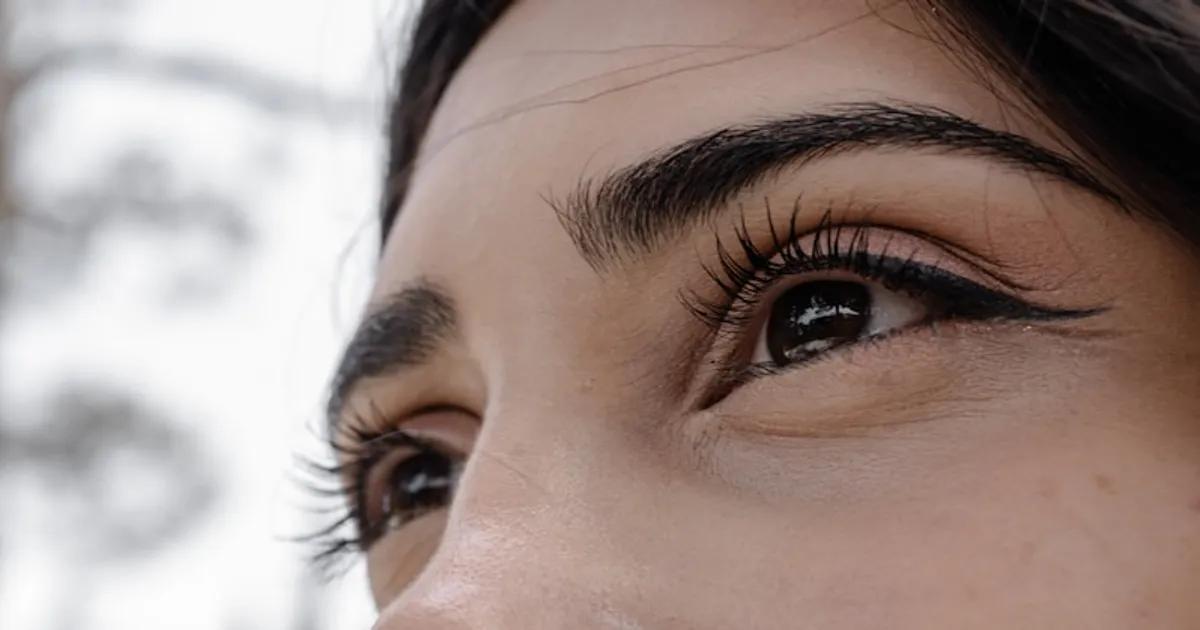
The right brow shape can lengthen a round face, soften strong angles or balance a wide forehead. Find your face shape and choose a waxed brow that works with your features, not against them.
The shape of your brows can completely change how your face reads: it can lengthen a round face, soften strong angles or balance a wide forehead. The key is to work out your face shape and choose a brow shaping in Gandia that brings out your features instead of competing with them. Below you'll find a close look at five face shapes, the brow that works best for each one and why waxing in Gandia is the most precise way to get there. Also available as brow shaping in Ontinyent and with the rest of our brow services in Ontinyent.
Which brow shape suits my face?
Before you get on the treatment bed, you need one basic piece of information: the geometry of your face. Choosing brows for your face shape isn't about trends, it's about proportions. A well-shaped brow frames your eyes naturally and can visually correct asymmetries you may not even have noticed.
To find your face shape, stand in front of a mirror with your hair tied back and look at three things: how wide your forehead is compared with your jaw, the overall length of your face and the shape of your jawline. With those three details, you'll fit into one of these five profiles.
Brows for a square face
A square face has a wide forehead, a defined jaw and similar width and length. The angles are strong, especially around the jaw.
Best shape: brows with a soft, rounded arch and a gentle curve. The aim is to soften the angles of the face without adding more straight lines.
What to avoid: completely straight, horizontal brows. They reinforce the squareness of the face and can make your expression look harsher. It's also best to avoid very sharp arches, which add hardness where there's already plenty of structure.
Arch point: usually placed towards the outer third of the brow, never in the middle. A centred arch on a square face creates a "permanently surprised" look that isn't flattering at all.
Brows for an oval face
The oval face is considered the most balanced: a forehead slightly wider than the jaw, a softly rounded chin and a length slightly greater than the width.
Best shape: brows with a soft, natural arch, without exaggerated curves or straight lines. An oval face gives you more freedom, but the classic proportion is still a delicate arch that follows the natural curve of the brow bone.
What to avoid: very high arches or overly thin brows. An oval face is already balanced; a dramatic shape can throw it off.
Arch point: in line with the outer edge of the iris when you look straight ahead. It's the most reliable reference and the one we use most often in the treatment room.
Brows for a round face
Similar width and length, prominent cheekbones, a rounded chin and no strong angles. The overall impression is softness.
Best shape: brows with a defined, angled arch. A higher, well-marked arch visually lengthens the face and gives it structure. This is one of the cases where brow shaping makes the biggest difference.
What to avoid: rounded brows that follow the natural curve of the face. They emphasise the roundness and make the face look wider.
Recommended thickness: medium thickness works well. Very thin brows tend to disappear on a round face, while very thick ones can look heavy if the forehead isn't wide.
Brows for a long face
Clearly longer than it is wide, with a high forehead and a narrow chin. It's sometimes confused with an oval face, but the difference lies in the vertical proportion.
Best shape: straight brows or brows with a very low arch that run horizontally across the face. The horizontal line "cuts" the visual length and balances the proportions.
What to avoid: high arches and thin brows. Both emphasise the vertical line and make the face look even longer.
Extra tip: keeping a medium-to-full thickness helps fill horizontal space. A brow with good density and little curve is a long face's best friend.
Brows for a triangular face
A wide forehead that gradually narrows towards a pointed chin. It's also called a "heart" face when the hairline forms a widow's peak.
Best shape: brows with a soft, even curve and no sharp peaks. The arch should be rounded and moderate to balance the width of the forehead without adding more angular structure to the top of the face.
What to avoid: very high arches or very straight brows. The first draw attention to the wide forehead; the second emphasise the difference between the upper and lower parts of the face.
Density: medium thickness is the most balanced. Very thin brows leave too much space on the forehead and amplify the inverted-triangle effect.
Waxing: the most precise technique for brow shaping
Once you know which brow shape suits you, the next step is choosing how to get it. Brow waxing is still the preferred technique in most professional salons, and for good reason: it gives a level of control over the shape that other methods can't match.
Waxing vs tweezing
Tweezers are handy for occasional touch-ups – a stray hair, a tiny correction between appointments – but they're not the ideal tool for shaping from scratch. Each pluck removes a single hair, which makes it very hard to keep the brows symmetrical and takes a long time.
Wax removes groups of hairs in one go, following a line drawn beforehand. The result is a cleaner, more defined and much more symmetrical outline. Wax also catches short hairs (2-3 mm) that tweezers can't grip.
Waxing vs threading
Threading has its fans and gives good precision in expert hands. Wax, however, has two practical advantages: it removes hair section by section following the drawn line (a brow shaping appointment with wax takes about 15 minutes) and it gently exfoliates the skin by lifting dead cells along with the hair.
Threading can feel more uncomfortable on very thin skin or sensitive areas such as the eyelid, where warm, low-temperature wax adapts better.
Waxing vs laser
Laser is a good option for reducing hair on large areas, but it has one important drawback for brows: it's permanent. If you have your brows lasered and fashions change, or you simply want a different shape, there's no going back. For a broader comparison of the two methods, see our waxing vs laser guide.
Brow waxing lets you adjust the shape at every appointment: lengthen the tail, lift the arch, add thickness… It's a flexible method that adapts to changing trends and, above all, to the natural way your face changes over time.
Step by step: how brows are shaped and waxed
Knowing what happens at each stage of the appointment helps you arrive more relaxed and get more out of it. Professional brow shaping with wax follows a set sequence:
1. Face analysis. The therapist assesses your face shape, natural symmetry and hair density, looking at where the brow starts, where the arch sits and where the tail ends. She'll usually ask you to look straight ahead so she can take measurements with a mapping pencil or a flexible ruler.
2. Drawing the shape. The target shape is drawn directly on the skin with a white or brown brow pencil. This step is key: you can see the result before a single hair is removed and ask for changes. If you'd like a higher arch, a fuller body or a longer tail, now's the time to say so.
3. Preparing the skin. The area is cleansed with an alcohol-free toner and a thin layer of pre-wax product (usually oil or talc) is applied to protect the skin and help the wax grip the hair without pulling on the skin.
4. Applying the wax. Warm, low-melt wax is applied in the direction of hair growth with a small precision spatula. On brows, the strips are tiny – barely a centimetre – so we can control exactly which hairs come out.
5. Removal. The wax strip is removed with a quick movement against the direction of growth. Straight afterwards, the therapist presses the area with a finger to ease the sensation.
6. Tweezer finish. After the wax, any stray or very short hairs are tidied with slanted tweezers. This detail is what sets a professional shape apart from a home job.
7. Soothing aftercare. Aloe vera gel or a soothing, anti-inflammatory cream is applied. If your skin is reactive, a cold compress for a couple of minutes can help.
At our beauty salon in Gandia and our salon in Ontinyent we follow this protocol at every brow shaping appointment, adapting the shape to each client's face analysis.
How long does a waxed brow shape last?
Brow waxing keeps the area clean for about 3 to 5 weeks, depending on how fast your hair grows. The hair cycle on the brows is shorter than on other parts of the body, so the first little hairs usually start to show from the second week.
The advantage of wax over tweezers is that, because it removes hair from the root, regrowth is finer and takes longer to reach the surface. With regular appointments – roughly every 4 weeks – hair tends to weaken and the gaps between appointments can gradually get longer.
The time of year also plays a part. In summer, metabolism speeds up slightly and hair can grow a little faster. In winter, the gaps between appointments usually stretch a bit.
If you'd like a more visible result, combining your shaping with a brow tint (shaping + tint, €24) adds definition by visually filling in sparser areas. And if you want a brushed-up, fuller effect, brow lamination is an add-on that works especially well on thin or unruly brows.
Aftercare after brow waxing
The skin around the brows is thin and constantly exposed. Good aftercare is the difference between skin that settles in a few hours and skin that stays irritated for days.
-
Don't touch the area for the first 2-3 hours. Hands carry bacteria and freshly waxed skin has open pores.
-
Skip make-up on your brows for at least 4-6 hours. That includes concealer, foundation and eyeshadow. Pigments can clog pores and irritate the area.
-
Avoid direct sun for 24-48 hours. If you can't, use a mineral (not chemical) SPF 50 sunscreen, as mineral filters don't penetrate the skin and are less reactive.
-
No scrubs or acids (glycolic, salicylic, retinol) on the area for 48 hours. These actives are too harsh for skin that has just lost its protective layer of hair.
-
Apply aloe vera or an unscented soothing cream twice a day for the first two days if you notice tightness or redness.
-
Avoid saunas, swimming pools and very hot water for the first 24 hours. Chlorine and heat can irritate open follicles.
-
Try not to tweeze between appointments. Letting the hair grow back evenly gives the therapist more to work with next time and helps her keep the brows symmetrical.
For more detailed aftercare, take a look at our complete brow waxing guide, where we go into each of these points.
Common mistakes when choosing a brow shape
Even with the best intentions, some mistakes come up again and again when people shape their brows without analysing their face first:
-
Copying someone else's brows. What looks perfect on an influencer with an oval face can unbalance a round one. The shape should always start from your own features, not from an outside reference.
-
Over-plucking the tail. A tail that's too short ages the face and creates a "comma brow". The tail should end at least at an imaginary line running from the side of the nose to the outer corner of the eye.
-
Chasing perfect symmetry. Brows are sisters, not twins. Forcing millimetre-perfect symmetry can look artificial. The professional approach is to balance them while respecting their natural asymmetry.
-
Leaving too long between the first appointments. If you're correcting a shape that didn't suit you, it's best to come back every 3-4 weeks at first, so the shape can be refined gradually without regrowth getting in the way.
-
Waxing right before an event. Redness after waxing can last from 30 minutes to a few hours depending on your skin. Ideally, book at least 24 hours before a special occasion.
Thin brows: can they be shaped if I barely have any hair?
Yes, although the approach changes. With sparse brows, the work focuses on defining the shape with the hair you have and removing only what's strictly necessary. Every hair counts.
In these cases, brow waxing in Gandia or Ontinyent is often combined with a henna brow tint, which stains not only the hairs but also the skin for about 7-10 days, giving the look of greater density. For longer-lasting results there's microblading, which imitates individual hairs with semi-permanent pigment (we don't offer it at our salons).
If the sparseness is recent – from over-plucking in previous years – there's good news: in many cases the follicles are still active and the hair can recover if you let it grow for a full cycle (6 to 12 weeks without removing anything).
FAQs about brow shaping and waxing
Does brow waxing hurt?
The brow area has a lot of nerve endings, so yes, you'll feel it. But the sensation lasts literally a second per strip and is far shorter than plucking hair by hair. The warm, low-melt wax used in professional salons keeps discomfort down because it doesn't drag on the skin. If your pain threshold is low, avoid booking in the days before your period, when skin is usually more sensitive. From the second or third appointment, most clients find the discomfort drops noticeably because the hair grows back finer.
Can I have my brows waxed if I have sensitive skin?
In most cases, yes. Brow waxing is suitable for sensitive skin as long as low-temperature wax is used and the before and after protection steps are followed. What you should avoid is waxing while using topical retinoids, strong exfoliating acids or oral isotretinoin, as these thin the skin and increase the risk of irritation or even lifting the top layer of skin. If you're unsure about your own case, ask the therapist before the appointment so she can check your skin and adapt the product if needed.
What if I don't like the shape I chose?
First of all, don't panic. Brows aren't permanent and the hair will grow back in 3-6 weeks. In the meantime, you can use a brow pencil or pomade to fill in any areas that feel bare. If the problem is an arch that's too high or a tail that's too short, a fibre brow gel can disguise the difference while the hair recovers. At your next appointment, explain clearly what you didn't like: therapists appreciate direct feedback because it helps them fine-tune the shape. It's normal to need two or three appointments to find the shape you really love.
How often should I have my brows waxed?
The ideal gap is between 3 and 5 weeks, depending on how fast your hair grows. If you come back before three weeks, there probably won't be enough new hair to work on precisely (wax needs at least 2-3 mm of length to grip). If you wait more than 5-6 weeks, regrowth can blur the shape and the next appointment will need more correction. The most efficient routine is every 4 weeks, which matches the average hair growth cycle on the brows and keeps the shape clean without unnecessary appointments.
Does the ideal brow shape change with age?
Yes, and it's rarely talked about. Over the years, skin loses firmness and the tissue around the eyes tends to drop slightly. A low-arched brow that looked perfect at 25 may need a slightly higher arch at 45 to make up for that natural drop and keep your eyes looking open. That's why your brow shape should be reviewed regularly by a professional, not just repeated mechanically year after year. At each brow waxing appointment in Gandia or Ontinyent, the therapist can check whether small adjustments are worth making.
Can brow waxing be combined with other brow treatments?
Absolutely. In fact, the most common combinations in a salon are waxing + tint and waxing + lamination. A brow tint adds colour and definition, ideal if your hairs are fair or some areas are sparser. Brow lamination brushes the hairs into place and sets them, giving a fuller, tidier look for 5-6 weeks. The best order is to wax first and then apply the add-on treatment, all in the same appointment. That way the shape is clean before the tint or lamination goes on.
Find the shape that defines you
Choosing your brows by face shape isn't a beauty whim: it's a real way to bring out your eyes and feel more comfortable with what you see in the mirror. The most important thing is a personalised analysis based on your own features, not generic trends.
At Adrian Beauty Studio in Gandia and Adrian Beauty Studio in Ontinyent we shape brows with wax following an individual face analysis. If you've never had your proportions studied, or you've been wearing a shape that doesn't quite convince you, a single appointment can make the difference. You can see the details and book on our brow shaping page (€10; with tint or henna, €24).
Quick reference: waxing
| Area | Session | Lasts | Pain (1-5) |
|---|---|---|---|
| Classic bikini line | 10-15 min | 3-5 wks | 3-4 |
| Underarms | 10 min | 3-4 wks | 3 |
| Half legs | 15 min | 3-5 wks | 2-3 |
| Upper lip | 5 min | 2-3 wks | 3 |
| Eyebrows | 10 min | 3-4 wks | 2-3 |
| Back | 25 min | 4-5 wks | 3 |