Brow Lamination vs Tint: Differences, Results and Which to Choose
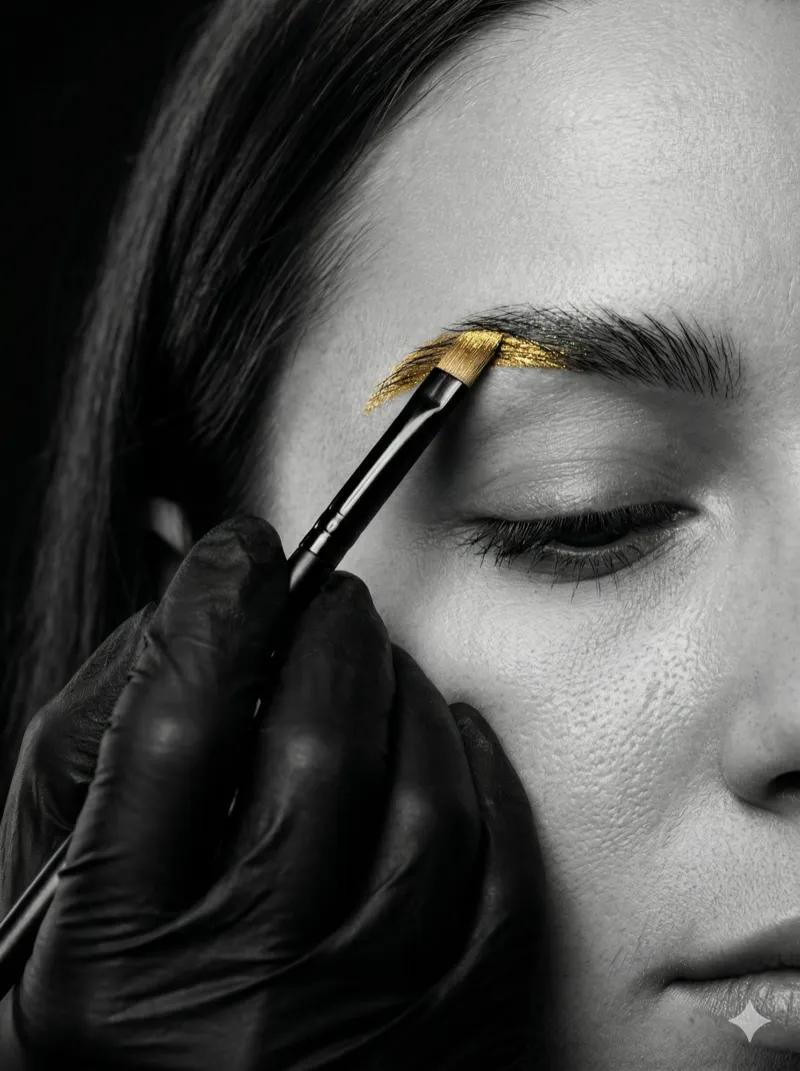
Brow lamination and tinting are complementary yet very different treatments. We compare duration, results and who each one is best suited to.
What is brow lamination: definition and process
Brow lamination is a chemical treatment that restructures the direction of the hair using keratin and a setting agent, creating a brushed-up, voluminous and uniform look that lasts between 6 and 8 weeks. According to the Spanish Federation of Aesthetics, it is the fastest-growing brow treatment in demand in 2025-2026, with a 180% increase in searches in Spain compared to the previous year. The process is carried out in three steps over 45-60 minutes: first, a lifting lotion is applied to break the disulphide bonds in the hair (similar to a hair perm), allowing each hair to be redirected. Then the brow is brushed into the desired direction — usually upwards — and a setting lotion is applied to rebuild the bonds in the new position. Finally, a nourishing keratin serum seals the cuticle and adds shine.
What is brow tinting: definition and process
Brow tinting is a colouration procedure that deposits pigment onto the hair and optionally the skin to intensify the colour, cover grey hairs and create the appearance of greater density, lasting 3 to 5 weeks. There are two main types: oxidative chemical tint, which penetrates the hair cuticle using 3-6% hydrogen peroxide, and henna tint, a plant-based pigment extracted from the Lawsonia inermis plant that also colours the skin beneath the hair. The process takes between 15 and 30 minutes: the area is cleansed, petroleum jelly is applied around the brow for protection, the tint is mixed to the selected shade, applied over the hair with a fine brush and left to develop for 10-15 minutes (chemical) or 15-20 minutes (henna). It is removed with damp cotton and the result is immediate.
Full comparison table
| Feature | Brow lamination | Brow tint |
|---|---|---|
| What it does | Redirects and sets the hair | Colours the hair (and skin with henna) |
| Result duration | 6-8 weeks | 3-5 weeks |
| Time in salon | 45-60 minutes | 15-30 minutes |
| Approximate price | 30-55 EUR | 12-25 EUR |
| Pain | None | None |
| Visual result | Volume, neatness, brushed-up effect | Intense colour, grey coverage |
| Ideal for | Unruly, sparse or shapeless brows | Fair brows, greys, poor definition |
| Maintenance | Optional daily brow gel | Avoid exfoliants in the area |
| Can be combined | Yes, with tint | Yes, with lamination |
| Contraindications | Pregnancy, irritated skin | Tint allergy, open wounds |
Who is each technique for
Brow lamination is the technique recommended for three specific profiles that represent 75% of the clients who request it at Adrian Beauty Studio. First, people with unruly brows whose hairs grow in multiple directions and will not stay groomed with gel — lamination fixes them 24/7 for weeks. Second, brows with medium-to-low density that need to look fuller: by brushing upwards, the hairs cover more surface area and gaps are disguised. Third, flat or drooping brows that need a visual lifting effect. Tinting, on the other hand, is ideal for fair brows that need colour definition, brows with greys that need coverage, and dense but barely visible brows due to a lack of contrast with the skin. The key difference is that lamination works on structure whilst tinting works on colour.
Lamination with tint: the winning combination
Combining lamination and tint in a single session is the most complete brow treatment available today, and the most requested at our studio, with 62% of brow clients choosing this option. The protocol combines both processes: the full lamination is carried out first (lifting + setting + nourishment) and the tint is then applied to the already-set brow, which absorbs it better because the cuticle has been opened during the lamination process. The result is a brow with perfect direction, maximum volume AND intense colour, eliminating the need for daily brow makeup for 5-6 weeks. The combined price is usually 15-20% lower than both services booked separately: at Adrian Beauty Studio the lamination + tint package costs between 40 and 65 EUR. The session lasts 60-75 minutes and maintenance is minimal — simply avoid wetting the brows for the first 24 hours.
Aftercare and maintenance for each technique
Brow lamination requires specific care during the first 24-48 hours: do not wet the brows, do not apply makeup or creams to the area, and sleep on your back to avoid distorting the shape whilst it fully sets. From the third day onwards, you can apply a clear brow gel in the morning to prolong the effect, and a nourishing oil (castor or argan) at night to keep the hair hydrated. Tinting requires less aftercare: simply avoid oil-based makeup removers, facial exfoliants on the brows and very hot water directly on the area during the first week. Products containing retinol speed up colour loss, so it is best to keep them away from the brows. For both techniques, SPF protects your investment: UV radiation degrades both tint pigments and the bonds set by lamination.
Frequently asked questions
Is it better to have lamination or tinting?
It depends on your needs. If your issue is unruliness and lack of volume, go for lamination. If it is a lack of colour or grey hairs, tinting is the answer. For a complete result, combining both is the best option.
How long does brow lamination last?
Between 6 and 8 weeks with proper aftercare. The hairs will gradually return to their natural direction as new hairs grow in.
Does lamination damage the brows?
No, provided it is carried out by a trained professional using quality products. The final keratin step nourishes the hair. It is not recommended to have more than 6 laminations per year in order to respect the natural hair growth cycles.
Can I have both treatments on the same day?
Yes, that is the most common and recommended approach. The tint is applied after lamination, taking advantage of the fact that the cuticle is receptive, and the result is superior to having them done separately.