Dry Feet and Cracked Heels: Causes, Treatment and Prevention
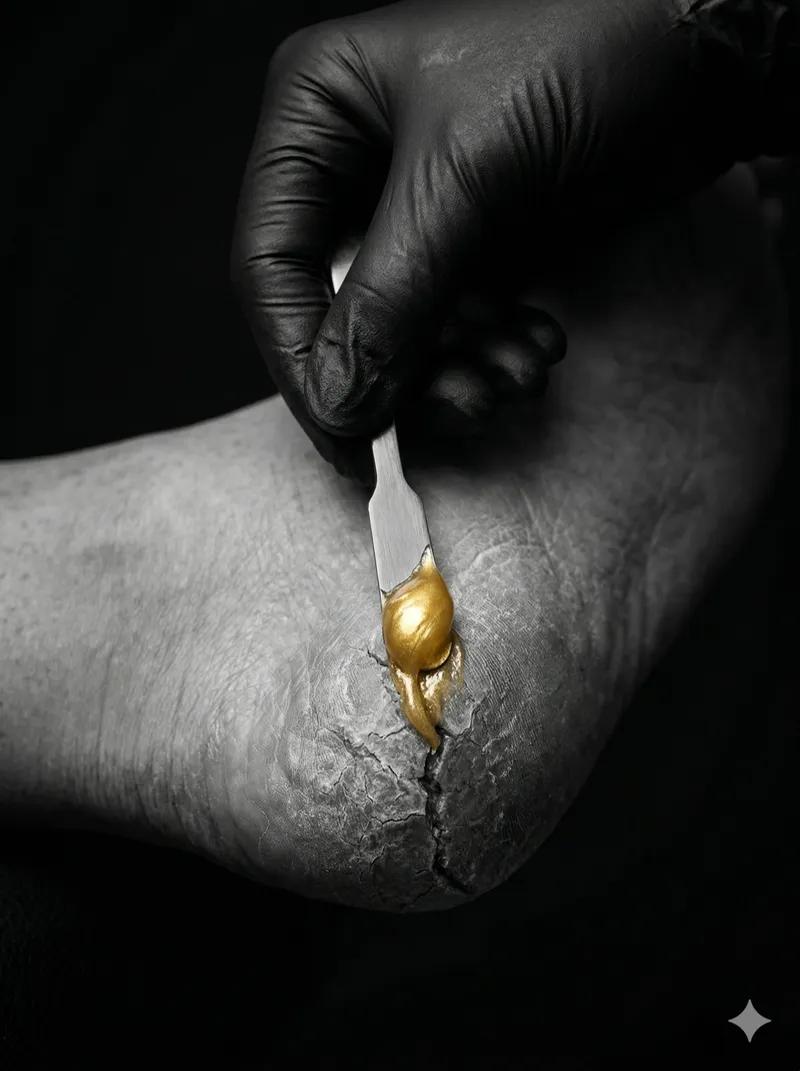
Plantar xerosis: causes, severity grades, urea treatment and when to see a podiatrist.
What is plantar xerosis
Plantar xerosis is extreme dryness of the foot skin, particularly on the heel. The skin in this area lacks sebaceous glands, relies on eccrine sweat glands for moisture and bears 40-60% of body weight with each step. When hydration fails, the stratum corneum loses elasticity and cracks under pressure.
Causes
- Insufficient moisturising (not applying cream to the feet)
- Unsuitable footwear (unsupportive sandals, closed shoes without ventilation)
- Prolonged standing + excess weight
- Diabetes, hypothyroidism, psoriasis
- Dry climate, central heating, air conditioning
- High-pH soaps, very hot water
- Age 50+ (fewer lipids, fat pad loses volume)
4 severity grades
| Grade | Appearance | Action |
|---|---|---|
| 1 — Mild | Rough, whitish, no cracks | 10% urea daily + cotton socks |
| 2 — Hyperkeratosis | Thick yellowish layer | 20% urea + pumice stone 1-2x/week + professional pedicure |
| 3 — Superficial fissures | Visible lines, no bleeding | 25% urea + overnight petroleum jelly seal + pedicure with rotary file |
| 4 — Deep cracks | Bleeding, reddened | Podiatrist/doctor. Do not treat at home. |
Home treatment
Urea by grade
- 10%: daily maintenance (grade 1)
- 20%: active treatment (grade 2)
- 25%: intensive keratolytic (grade 3, overnight under socks only)
Correct use of pumice stone
On damp skin (never dry), strokes in one direction, 2-3 min per foot, max 2x/week.
Night-time routine (10 min)
- Wash with neutral pH cleanser, lukewarm water (<37°C)
- Dry thoroughly between toes
- Apply urea at the appropriate percentage
- Petroleum jelly over heels if fissured
- Cotton socks
What does NOT work
- Home blades (risk of injury + keratin rebound)
- Vinegar alone (insufficient keratolytic action)
- Coconut oil alone (emollient, not humectant)
- Aggressive metal files
Professional pedicure
Ceramic/diamond burrs remove keratin layer by layer without cutting. Urea masks at 30-40%. Visible results from the first session. Grade 2: every 4-6 weeks. Grade 3: every 2-3 weeks initially.
When to see a podiatrist
- Cracks that bleed repeatedly
- Infection (redness, warmth, pus)
- Diabetes or circulatory problems (pedicure for diabetics)
- 4+ weeks without improvement
- Suspected psoriasis
Prevention
- Daily moisturising (10% urea even when feet look fine)
- Footwear with heel support
- Cotton/bamboo socks
- Seasonal preventive pedicure
- Short, lukewarm showers
This does not replace medical diagnosis.
More: calluses and hard skin.
FAQ
Does petroleum jelly alone cure cracked heels?
No. It creates an occlusive seal but does not hydrate. Apply urea first, then petroleum jelly.
Can I use a pumice stone every day?
No. Daily use stimulates more keratin production. Once a week is sufficient.
How long until urea shows improvement?
Softening by day 5-7. Visible improvement by week 3-4. Fissures: 4-6 weeks.
Does urea sting?
20-25% may sting for 1-2 minutes on fissures. If intense, reduce the concentration.
Is it hereditary?
There is a genetic predisposition, but habits play a larger role.