Eyelash Extensions Falling Out Too Quickly: Causes and Professional Solutions
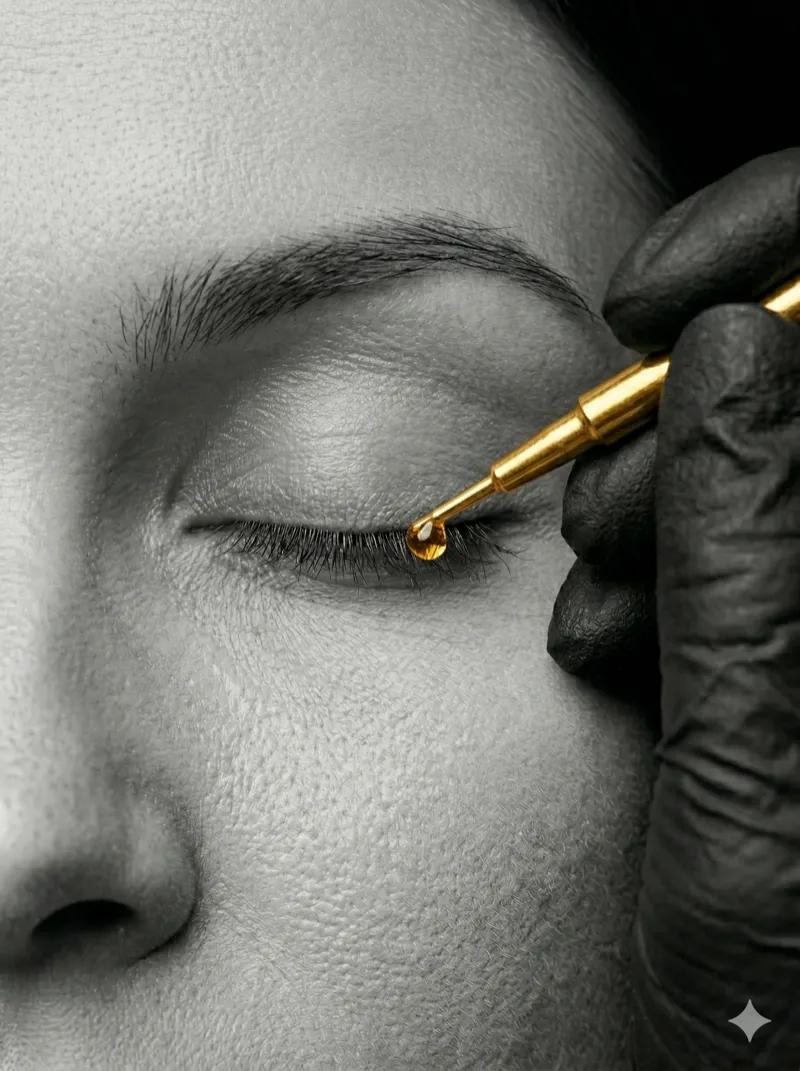
Eyelash extensions fall out because the adhesive bonding them to the natural lash ages, the lash renews its biological cycle, or an external factor has weakened the bond prematurely. Identifying which of these three causes is at play is the first step towards taking effective action.
Eyelash extensions fall out because the adhesive bonding them to the natural lash ages, the lash renews its biological cycle, or an external factor has weakened the bond prematurely. Identifying which of these three causes is at play is the first step towards taking effective action. This article breaks down the real causes, distinguishes normal shedding from premature loss and offers practical solutions to improve retention.
What retention means and how long extensions should last
Retention is the adhesive's ability to keep the extension bonded to the natural lash for as long as possible without premature shedding. Individual lash extensions are applied one by one to each natural lash using cosmetic-grade cyanoacrylate, and their durability depends on the quality of the bond, the client's hair growth cycle and aftercare. Gradual loss is expected: the human eye sheds between 1 and 5 natural lashes per day as part of its normal cycle, and each extension falls together with the lash it is attached to. Data from Adrian Beauty Studio show that clients who follow the aftercare instructions correctly complete the anticipated cycle without issues in over 80% of cases. Retention significantly below what is usual points to a technical or aftercare problem that should be identified and corrected as soon as possible.
7 main reasons eyelash extensions fall out prematurely
Premature shedding rarely has a single cause. It is common for two or three factors to converge -- one technical and one related to aftercare -- which together shorten the adhesive's lifespan. The seven causes below are ranked from greatest to least impact on retention.
Poor preparation of the natural lash before application
Pre-treatment preparation is the most critical step. The therapist cleanses the natural lash with a primer or oil-free cleanser to remove traces of makeup, sebum and conditioner. If the surface contains any trace of oil, the adhesive cannot form a firm bond and the extension comes loose within the first few days. Direct observation in the treatment room confirms that this error accounts for up to 40% of premature shedding cases among new clients who have not prepared the area beforehand.
Unsuitable or expired adhesive
Eyelash extension adhesive is a cyanoacrylate formulated for cosmetic use with a shelf life of 4 to 6 weeks once opened. Beyond that period, it loses viscosity and adhesive strength. An adhesive that is too fast or too slow for the humidity conditions at the time produces fragile bonds. Professional practice shows that controlling temperature (between 20 and 23 degrees C) and relative humidity (between 45% and 60%) during application improves retention by 25 to 30% compared with uncontrolled conditions.
Exposure to moisture and oils in the first 24-48 hours
The first 24-48 hours are the adhesive's critical window: the cyanoacrylate needs that time to complete its polymerisation. Wetting the lashes, sweating heavily, using facial steam or spending time in very humid environments during this period interrupts curing and weakens the bond from the outset. According to the Journal of Cosmetic Dermatology, moisture exposure during those initial hours reduces the adhesive strength of cyanoacrylate by up to 35% compared with samples cured in dry conditions.
The natural lash growth cycle
Lashes have a life cycle of between 60 and 90 days divided into three phases: anagen (growth), catagen (transition) and telogen (shedding). When a lash enters the telogen phase, it falls naturally along with the extension attached to it, regardless of the adhesive quality. This is a physiological process, not a technical failure. Clients with shorter hair cycles or greater follicular activity notice faster renewal and require top-ups more frequently within the standard interval.
Incorrect isolation technique
Isolation means applying each extension to a single natural lash without touching adjacent lashes. When two or more lashes become stuck together, the mechanical tension of daily eye movement pulls the extensions out within days. A professional salon devotes the necessary time to separate each lash with tweezers before application. This rigorous isolation is one of the clearest indicators of technical quality in the service.
Use of oil-based products around the eyes
Oil-based makeup removers, cleansing balms, eye creams with mineral or argan oil and oil-based serums gradually dissolve the adhesive. Data gathered from professional consultations show this is the most common aftercare mistake: it appears in approximately 60% of clients who report premature shedding. The alternative is to use foam cleansers or oil-free micellar waters specifically formulated for extensions.
Rubbing or sleeping face-down
Mechanical friction is the most underestimated factor. Rubbing the eyes -- even involuntarily during sleep -- generates shear forces that break the adhesive bond over time. Sleeping face-down applies direct pressure on the lashes for hours. A silk or satin pillowcase considerably reduces friction compared with cotton, and sleeping on your side or back protects the extensions from nocturnal pressure.
How to tell whether extension loss is normal or a technical problem
Distinguishing between normal and premature shedding is essential to knowing whether anything needs to change. Normal shedding follows the hair cycle rhythm: extensions disappear in an evenly distributed manner, without visible patches, and fall together with the intact natural lash. The extension-lash bond is preserved; what happens is that the lash detaches from the follicle through its own biological maturation.
Premature shedding shows a different pattern: several extensions disappear within a few days, bare patches form, or extensions fall on their own leaving the natural lash in place. If the extension falls without taking the lash with it, the adhesive failed. If they fall in a group in the same area, incorrect isolation in that zone is the most likely cause. According to the International Lash Artist Safety Council (ILASC), monitoring during the first 7 days after application allows the type of shedding and its origin to be identified with high accuracy.
Warning signs that justify a visit to the salon before the scheduled top-up: more than 10 extensions lost within 72 hours, persistent eye irritation, redness along the lash line or a burning sensation. These symptoms may indicate a reaction to the adhesive or application to lashes in the transition phase and require professional assessment without delay.
Professional solutions to improve extension retention
Solutions for poor retention begin with an accurate diagnosis. If the issue is preparation or isolation, the next application can correct it entirely. If the adhesive is expired or unsuitable for the salon's conditions, replacing it resolves the majority of cases immediately.
Beauty salons in Gandia and Ontinyent that work with standardised protocols control three key factors at every session: pre-cleansing of the lash, environmental conditions during application and an aftercare briefing before the client leaves. This sequence systematically reduces retention problems.
A top-up within the standard interval fills in the areas with the greatest loss without a full application, reducing session time. Clients with very fine natural lashes may benefit from extensions with a smaller diameter or curvature to reduce tension on the follicle and prolong adhesion.
Daily care routine to make extensions last longer
A consistent care routine can extend the life of extensions by 5 to 7 additional days compared with no aftercare at all. The essential steps are:
- Initial curing window: avoid contact with water, steam, intense perspiration and cosmetics in the eye area during the critical period specified by the therapist at the end of the session.
- Daily cleansing: use an oil-free foam cleanser with a soft brush, in vertical strokes from root to tip. Never cleanse horizontally.
- Morning brushing: comb the extensions with a clean mascara wand every morning to maintain their shape and detect loose extensions before they fall.
- Compatible cosmetics: use only eye contour products, primers and makeup removers labelled as "lash-safe" or "oil-free". Avoid anything in a waterproof format.
- Low-friction pillowcase: switch to a satin or silk pillowcase, or use a travel neck pillow to minimise nocturnal contact.
- Avoid direct heat: a hairdryer on the hot setting, saunas and intense steam weaken the adhesive with repeated exposure.
These principles share the same logic as aftercare for lash lifts: in both treatments, protecting the fixing agent during the first hours is decisive for how long the result lasts.
When to consider a lash lift as an alternative to extensions
A lash lift with tint is worth considering when extensions repeatedly cause retention problems, reactions to the adhesive or a maintenance burden the client cannot sustain consistently. A lash lift curls the natural lash from the root using a silicone rod and a fixing agent, with optional tint to intensify the effect. Because there is no external adhesive, it eliminates the risks associated with cyanoacrylate.
The result of a lift lasts between 6 and 8 weeks, with almost zero maintenance compared with extensions. The trade-off is that the effect depends on the natural volume of the lash: clients with sparse or very short lashes will see a more subtle result. For those deciding between the two methods, the article on lash lift versus extensions details the differences, advantages and ideal profile for each treatment.
Lash lifts are available at the Ontinyent and Gandia centres. If extensions have caused episodes of irritation, a preliminary consultation with the therapist allows the condition of the natural lash to be assessed before starting any new treatment.
Frequently asked questions about eyelash extensions falling out
How long do individual lash extensions last without top-ups?
Individual lash extensions last between 3 and 4 weeks under optimal conditions: professional application, suitable adhesive and correct aftercare. From the second week, hair-cycle shedding begins to create visible gaps in coverage. A partial top-up fills those gaps without a full application, saving both time and cost. Without any maintenance, most clients find the aesthetic result deteriorates noticeably from the fourth or fifth week after the last session.
Is it normal to lose 2-5 extensions per day?
Yes, it is physiologically normal. Each eye has between 90 and 150 natural lashes at different stages of the hair cycle. Daily loss within that range is due to the natural telogen cycle, not a failure of the adhesive or the technique. The alarm bells start ringing when loss consistently exceeds 5-7 extensions per day, when shedding occurs in clusters or when the extension falls without taking the natural lash with it. Those situations do require professional assessment.
Can I use mascara with eyelash extensions?
Mascara can be used with individual lash extensions under certain conditions: an oil-free formula, no waterproof version and applied only to the tips -- never at the root. Waterproof mascara requires an oil-based remover, which directly attacks the adhesive. If the extensions already provide sufficient volume, mascara is unnecessary; frequent use shortens retention even with compatible formulas.
How often do I need extension top-ups?
The standard interval between top-ups is 2 to 3 weeks from the previous application. Waiting longer means greater coverage loss and may turn the top-up into a near-complete application, with the associated cost and time. Clients with faster hair cycles -- common in younger individuals or those with hyperthyroidism -- need to return at the shorter end of that interval. Establishing a regular schedule from the outset allows the therapist to monitor the health of the natural lash and adapt the treatment over time.
Does crying or sweating affect eyelash extensions?
Once the adhesive's curing window has passed, occasional crying or moderate sweating does not significantly affect well-applied extensions. The impact occurs when moisture exposure is intense or prolonged -- swimming pools, saunas, prolonged crying or very intense daily exercise -- because water degrades cyanoacrylate cumulatively. Sensitivity is greatest in the days immediately following any application or top-up, when the adhesive has not yet reached its maximum strength.
If your extensions are not lasting as long as expected or the maintenance is proving difficult to sustain, it may be worth reviewing the entire process with a professional. At our Gandia centre and the one in Ontinyent, the session includes an initial assessment of the lash condition to choose the most suitable treatment. To compare options before deciding, the article on lash lift versus extensions summarises the key differences between both methods.