Gel vs polygel vs acrylic: which to choose for your nails in Gandia and Ontinyent
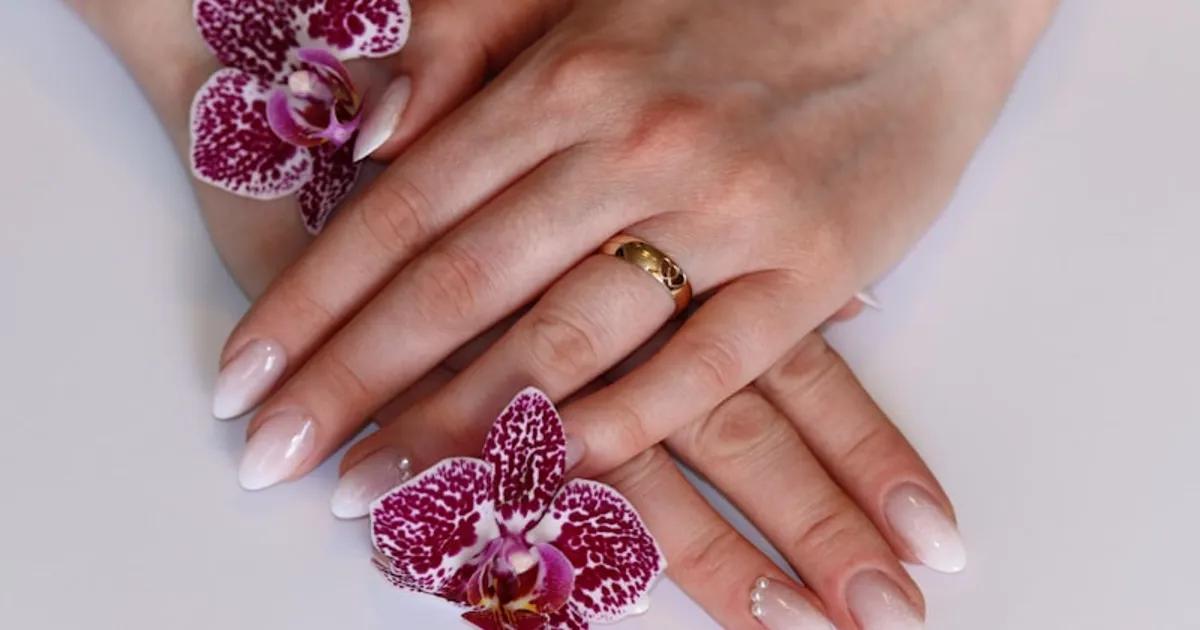
Gel, polygel or acrylic: three techniques, three different results, and one question we hear at the nail desk every single week.
Gel, polygel or acrylic: three techniques, three different results, and one question we hear at the nail desk every single week. The difference between gel, polygel and acrylic isn't just about how long they last or what they cost: your nail type, your daily routine, the finish you're after and even the time of year all come into it. Here's a practical comparison with everything you need to make an informed choice.
If you already know the basics and want more detail on one particular technique, have a look at our complete guide to acrylic nails or our gel nails guide.
What is gel? Features and how it's applied
Gel is a thick resin that's applied over your natural nail (or over a tip or form) and hardens under an LED or UV lamp. It has no smell while it's being applied, which makes it the most comfortable choice if you're sensitive to chemicals.
There are two main types: hard gel, which lets us build extensions with some length, and soft gel (or builder gel), which strengthens the nail without adding much length. At Adrian Beauty Studio in Gandia and at our beauty salon in Ontinyent we use professional-brand builder gels that offer controlled flexibility without compromising strength.
At the salon, a gel application usually follows these steps:
- Prep: light buffing of the surface, cuticles pushed back and the nail cleaned with a dehydrator.
- Primer and base: a layer of acid-free primer and a bonding base go on.
- Building: the gel is shaped with a brush, layer by layer, curing each one under an LED lamp (30-60 seconds per layer).
- Filing and shaping: the structure is refined until the apex and shape are just right.
- Finish: top coat, final cure and a little cuticle oil.
A full set with moderate length takes around 60 minutes in total.
What is polygel? The next step on from traditional gel
Polygel is a hybrid that combines the flexibility of gel with the structure of acrylic, but without mixing in a liquid monomer. It comes in a tube as a soft, mouldable paste, worked with a brush dipped in slip solution (a liquid that helps with shaping and stops the product sticking).
Its big advantage over traditional gel: it doesn't run or move before it's cured, so shaping is more precise, especially for long extensions or tricky shapes like almond or stiletto.
At the salon, a polygel application goes like this:
- Prep: exactly as for gel (light buffing, cuticles, dehydrator).
- Dual form or tip: a dual form is placed, or we work on a paper form.
- Shaping: a small ball of polygel goes onto the form and is spread with a brush dipped in slip solution.
- Curing: it's pressed onto the nail and cured under an LED lamp (60 seconds).
- Filing and refining: the form comes off and the structure is shaped.
- Colour and seal: polish and a top coat, then a final cure.
You'll find more about this treatment on our polygel service page. Application time is similar to standard gel — around 60 minutes — although very long extensions can take a bit longer.
What are acrylics? The classic, tough option
Acrylic nails are built by mixing a powder (acrylic polymer) with a liquid (monomer). The chemical reaction creates a mouldable bead that hardens in the air, with no lamp needed.
It's the longest-standing technique and still the go-to when you want maximum hardness and extra-long nails. The monomer has a distinctive smell that can be quite strong, so we always work with good ventilation and low-emission products.
Step by step:
- Prep: filing, cuticle work, dehydrator, and acid or acid-free primer depending on the nail.
- Tip or form: a plastic tip is glued on or a paper form is fitted.
- Building: the brush is dipped in monomer, picks up acrylic powder and beads are placed on the nail, shaping the structure before it sets (a working window of 30-60 seconds per bead).
- Air-drying: no lamp needed — acrylic hardens on its own.
- Thorough filing: shape, apex and thickness are refined with a medium-grit file.
- Colour and finish: regular polish, gel polish or gel nail art.
A full application usually takes 60 to 90 minutes, depending on length and design. If you'd like to go deeper into how they're built, we have a detailed guide to acrylic nails.
Head to head: gel vs polygel vs acrylic
How long they last and upkeep
| Aspect | Gel | Polygel | Acrylic |
|---|---|---|---|
| Wear without an infill | 3-4 weeks | 3-4 weeks | 4-5 weeks |
| Infill frequency | Every 3 weeks | Every 3 weeks | Every 3-4 weeks |
| Impact resistance | Medium-high | High | Very high |
| Flexibility | High | Medium-high | Low (rigid) |
Acrylics win on sheer staying power, but day to day the real difference between gel and acrylic is smaller than it looks: with a little basic care, any of the three will last comfortably between maintenance appointments.
Price and value for money
We don't give fixed prices here because they depend on length, design and add-ons. The most reliable thing is to check up-to-date prices on our polygel service page. As a rough guide, all three techniques sit in a similar price range, with acrylics slightly higher when they include complex designs, simply because they take longer.
Look and design options
Gel gives a natural, glossy finish with a "glassy" effect that looks especially good on short and medium nails. Polygel gives an equally natural finish but is more versatile for longer extensions while staying lightweight.
Acrylics are the queens of sculpted design: coffin, stiletto and edge shapes with a solid structure. For 2026 trends, all three techniques can take chrome, magnetic cat eye, glass nails and baby boomer, although for 3D nail art and fantasy designs acrylic still has the edge because it's so easy to sculpt.
Damage to the natural nail
None of these techniques damages the nail if it's applied and removed properly. The real risk isn't the product but the removal: ripping or prising off an artificial nail tears away layers of keratin.
- Gel: removed by filing plus acetone wraps (15-20 minutes). Low potential for damage.
- Polygel: removed much like gel, a little faster because the product softens easily.
- Acrylic: needs longer soaking in acetone (20-30 minutes) and more filing. If it's rushed, the risk of weakening the nail goes up.
Whichever technique you have, we always recommend having it removed at the salon. For more detail, see our guide to removing gel and acrylic nails.
Application and setting speed
Gel and polygel cure instantly under an LED lamp — each layer is solid in 30-60 seconds. Acrylics air-dry in 2-3 minutes per layer, which stretches the process slightly but means no lamp is needed.
In practice, appointment length is about the same for all three techniques on a standard service.
The best option for each type of nail
For short, fragile nails
Polygel is the one we'd recommend. It's light enough to build extensions without overloading a weak nail, and its moderate flexibility absorbs small knocks without snapping. Gel nails also work well on short nails if you want strength without length — a builder gel overlay adds strength without making them longer.
For sensitive natural nails
If you'd rather have minimal reinforcement with no extension, soft gel is the technique that needs the least work on the nail. And if your nails react to heavy filing, mention it when you book so we can adapt the prep.
If you're after something even lighter, gel polish gives you lasting colour without any building.
For nails that need extra strength
Manual work, hospitality, lots of sport: acrylics are still the benchmark. Their rigidity is a real plus when your hands take constant knocks. Polygel comes a close second, with good strength and a bit more comfort.
For complex designs and 2026 trends
This year the big looks are aurora chrome finishes, XL almond shapes, minimalist designs with geometric lines and glass effects with encapsulated details. All three techniques can do these trends, although:
- Acrylic: best for 3D structures and extreme shapes.
- Polygel: ideal for long almond and coffin nails with a natural look.
- Gel: perfect for subtle designs on short to medium nails.
If you'd like to see specific design options for gel nails in Gandia or a manicure in Ontinyent, book a quick consultation first and we'll go through some inspiration together.
Decision guide: find your ideal technique
| Your situation | Recommended technique |
|---|---|
| Short nails, you want a light extension | Polygel |
| Natural nails, strengthening only | Gel (overlay) |
| Manual work or sport | Acrylic |
| First time with artificial nails | Gel or polygel |
| Wedding or special occasion | Gel or polygel (natural finish) |
| 3D designs or extreme shapes | Acrylic |
| Sensitive to chemical smells | Gel or polygel (no monomer) |
| Longest time between appointments | Acrylic |
| Tight budget | Ask about options at the salon |
Aftercare and upkeep
Whatever technique you choose, aftercare makes all the difference between a manicure that lasts and one that lifts too soon. Here's a simple routine, stage by stage.
First 48 hours (the critical stage):
- Avoid soaking your hands in hot water for long periods (baths, jacuzzi).
- Don't use your nails as tools to open, scratch or peel things.
- Apply cuticle oil at night to keep the skin around the nail supple.
First week:
- Wear gloves when cleaning with chemicals (bleach, degreasers).
- Avoid metal files if you need to tidy an edge — use a glass or fine-grit file.
- Moisturise your hands, without letting cream get under the free edge.
Ongoing care:
- Cuticle oil at least 3 times a week.
- Go easy on hand sanitiser: too much dries out the product and can make it look cloudy.
- Come in for your infill on time; leaving it too long increases the risk of moisture getting under the structure.
For more aftercare tips, see our guide to caring for your nails after a manicure.
How to remove gel, polygel or acrylic without damage
By far the most common mistake: trying to take nails off at home by pulling or prising them up. Each technique has its own safe removal method:
- Gel: file off the top layer with a 180-grit file, wrap with cotton soaked in pure acetone for 15-20 minutes, then ease off gently with a wooden pusher. No forcing.
- Polygel: much the same as gel. Some polygels soften faster, cutting soaking time to 10-15 minutes.
- Acrylic: these need more patience. Deeper filing first, then soaking in acetone for 20-30 minutes. If the product doesn't come away easily, it's wrapped again — never scraped off by force.
If you still have questions about removal, read our guide to safe removal.
Troubleshooting common problems
Breaks and lifting
If a nail breaks, don't stick it back on with household glue — ordinary superglue can cause reactions and makes a professional repair harder. Pop into the salon for a quick fix. If lifting shows up on several nails before the two-week mark, it may point to a prep problem or an over-dehydrated nail plate.
Yellowing and discolouration
The usual culprits: long sun exposure without a UV-filter top coat, contact with hair dye or strongly pigmented products, and smoking. A good-quality top coat with UV protection slows this down. If it has already happened, a light buff and a fresh top coat at the salon usually sorts it out.
Irritation and inflammation
Any redness, persistent itching or swelling around the cuticle after an application needs attention. Have the product removed and speak to a healthcare professional before having it reapplied. Allergic reactions are rare, but they can happen with any of the three techniques, especially with low-quality products or over-exposure to monomers.
FAQs about gel, polygel and acrylic
Which one lasts longest?
Acrylics have a slight edge on sheer staying power, keeping their structure intact for 4-5 weeks without an infill. Gel and polygel usually stay in good shape for 3 to 4 weeks. That said, how long they really last depends a lot on aftercare and how much you use your hands. A well-cared-for gel manicure in Ontinyent can last just as long as poorly maintained acrylics.
Which one hurts least?
None of the three should hurt if done properly. The most common sensation is a brief warmth while curing under the LED lamp, which lasts just a few seconds. Acrylics don't need a lamp, so you won't feel that at all. If you ever feel sharp pain during the application, tell your nail technician straight away so she can adjust the process.
Is it true that acrylics damage the natural nail more?
It's one of the most widespread myths. The damage doesn't come from the product itself but from poor removal. Acrylics need more filing and longer soaking in acetone to come off, which raises the risk if it's rushed or done without experience. Applied and removed by professionals, all three techniques are equally kind to the natural nail. At our salons in Gandia and Ontinyent we always take our time over removal to protect the nail plate.
Which is best for short nails?
For short nails that need extending, polygel is the most versatile option: it builds moderate length while staying very lightweight. If you'd rather keep your nails short and just want them stronger, a builder gel overlay adds strength without adding length. Acrylics also work on short nails, but their rigidity can feel less comfortable if you're not used to them.
Can I easily switch techniques?
Yes, but the old product has to be removed completely before the new technique goes on. Gel can't safely go straight over acrylic, or vice versa. The best approach is to remove, give the nail a few days' rest with a strengthening treatment, then apply the new technique. If you're coming to us with another technique already on, let us know when you book so the appointment includes time for removal.
How much does each technique cost in Gandia and Ontinyent?
Prices vary with length, type of design, whether removal is included and other add-ons. For up-to-date prices, the best place to look is our polygel service page, where you'll find the available options and what affects the price. At both salons, in Gandia and in Ontinyent, we offer the same techniques and the same quality standards.
Which one needs the most upkeep?
All three need regular infills to keep the structure in shape and stop moisture getting under the product. Acrylics let you space appointments out a little more (every 3-4 weeks), while gel and polygel usually need an infill every 3 weeks. Between appointments, home care is the same for all three: cuticle oil, gloves for cleaning and avoiding unnecessary knocks.
Still not sure?
If you've read this comparison and still aren't sure which technique suits your nails, your routine and what you're hoping for, the best thing is a quick consultation at the salon. In just a few minutes we'll check your natural nails, talk about what you're after and recommend the technique that fits best.
You can book at our Gandia salon or our Ontinyent salon. And if you'd like to explore more manicure options before deciding, take a look at our guide to gel polish or regular polish vs gel.
Quick reference: types of manicure
| Type | Lasts | Appointment | Adds length? |
|---|---|---|---|
| Gel polish | 2-4 wks | 45-60 min | No |
| Gel, no extension (formerly “semigel”) | 3-4 wks | 55 min | No |
| Gel/Polygel | 3-4 wks | 75-100 min | Yes |
| Acrylic | 3-5 wks | 80-110 min | Yes |
| OPI | 5-7 days | 30-40 min | No |