Yellow nails after polish: causes, prevention and how to whiten them
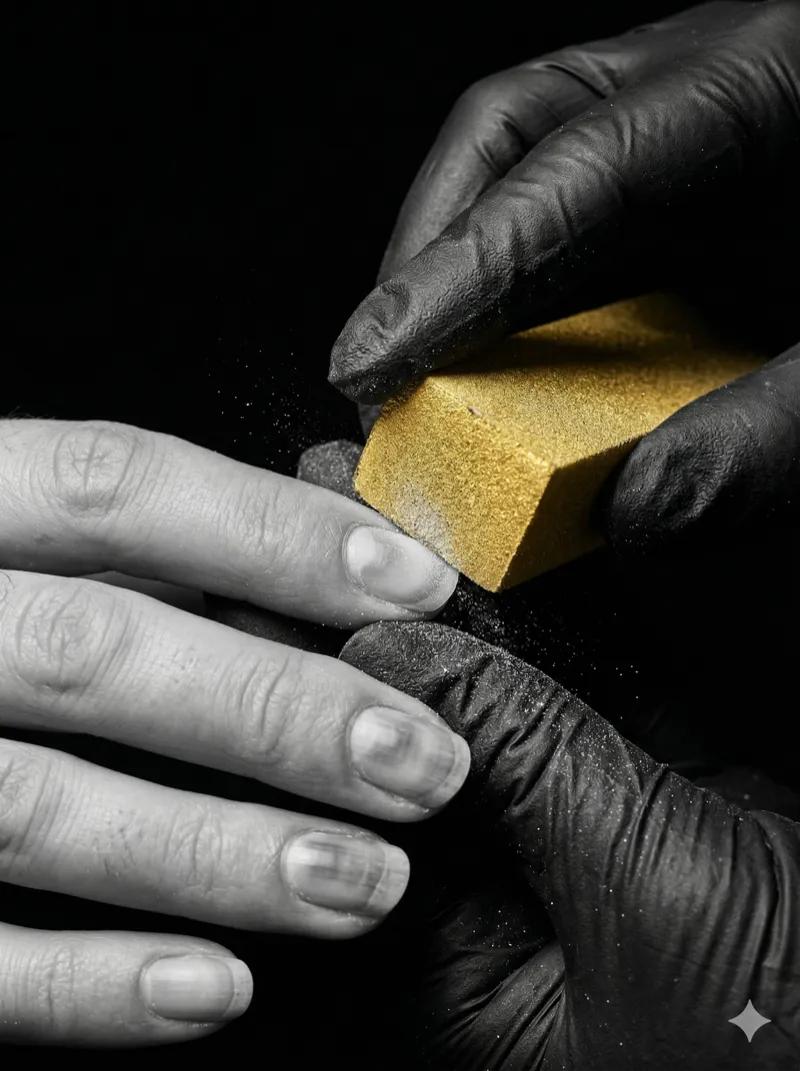
Yellow nails after wearing polish are one of the most common cosmetic complaints with regular manicures, and the cause is chemical, not a health problem.
Yellow nails after wearing polish are one of the most common cosmetic complaints we see with regular manicures, and the cause is chemical, not a health problem. Industry figures suggest that 60-70% of people who regularly wear dark polish get some degree of yellowing after several back-to-back sets without a protective base coat. The good news: it can be fixed and, above all, easily prevented with a simple change to your routine. If you're looking for a professional manicure, take a look at our manicures in Gandia and manicures in Ontinyent.
Why nail polish turns your nails yellow
Polish-related yellowing is a form of chemical staining: the colourants in the polish seep into the surface layers of keratin in your nail. Keratin is porous and soaks up pigment quite easily, especially when polish sits directly on the nail for more than 2-3 weeks without a break or a protective barrier. Intense shades (reds, oranges, burgundies, corals) contain high levels of iron oxides and azo dyes, and these are mainly responsible for the leftover stain. In most cases it is purely cosmetic, reversible and preventable with the right application routine.
Dark pigments and chemical reactions in the keratin
Red, orange and burgundy polishes contain iron oxide pigments which, after prolonged contact with keratin, bind to its outer layers through oxidation. This isn't a surface stain that washes off with water: iron oxide can work its way into the keratin fibres, much as hair dye penetrates the hair shaft. Quick-dry polishes are particularly problematic, because their solvents help the pigment sink in faster. Heat speeds things up too: nails exposed to the sun or hot water absorb pigment more easily because the keratin swells slightly. Choosing 3-free or 5-free formulas (free from formaldehyde, toluene and DBP) noticeably reduces how much pigment can bind.
No protective base coat
Skipping the base coat is the single biggest factor behind yellowing. A base coat acts as a physical barrier between the polish pigment and the nail surface, cutting leftover staining by 80-90% according to specialist manufacturers. One thin coat, applied properly and left to dry, makes all the difference between a nail that yellows and one that keeps its natural colour. In a professional gel polish service, the base coat is always the first technical step, without exception. At home, people often skip it simply because they don't know it matters, and the usual result is visible yellow marks a few weeks after taking the polish off. Our guide to gel polish explains the role of the base coat in each type of manicure.
Sun exposure and other external factors
UV light speeds up yellowing: sunlight oxidises the pigments in the polish and helps them bind to the keratin. You'll notice this more in summer or if you spend a lot of time outdoors wearing dark polish. Cheap polishes containing formaldehyde and toluene carry an extra risk: these compounds don't just yellow the nail by reacting directly with the keratin, they also make it more porous, so it absorbs even more pigment next time. Frequent contact with cleaning products without gloves, smoking and harsh acetone removal without moisturising afterwards also add to gradual discolouration. Dark polish + no base coat + regular sun exposure is the highest-risk combination.
Risk factors that speed up nail yellowing
Risk factors are the habits and conditions that make pigment bind to the keratin faster and more intensely. The main one is not using a base coat, which we identify as the primary cause in the vast majority of cases we see in the salon. Next comes keeping the same polish on for more than 3 weeks, which prolongs the pigment's contact with the nail. Polishes containing formaldehyde (listed as "formalin" on the label, or found in products without 3-free certification) speed up discolouration by reacting with the keratin proteins. Thin nails, or nails weakened by biting, previous harsh removals or nutritional deficiencies, are more porous and yellow more easily. In 2026, 3-free and 5-free polishes have become the quality standard in professional beauty salons, gradually replacing older formulas with harsher ingredients.
How to whiten yellow nails: home and professional methods
Whitening yellow nails means reducing or removing the pigment built up in the keratin, using gentle chemical agents or carefully controlled buffing. Options range from low-cost home remedies to professional treatments that work better and faster. The right method depends on how yellow your nails are: light stains after a few sets of polish respond well to home remedies used consistently, while deep stains built up over several months need a salon treatment. It is essential to tell cosmetic yellowing (caused by polish, by far the most common cause) apart from yellowing with a medical cause, which won't respond to any cosmetic treatment and needs to be seen by a dermatologist. Before trying any remedy, especially on nails whose texture or thickness has changed, it is always wise to get professional advice.
Natural remedies with lemon, bicarbonate of soda and vinegar
Lemon juice contains citric acid, a mild whitening agent that works on fresh, surface stains. How to use it: soak your nails in fresh lemon juice for 2-3 minutes, no longer, to avoid irritating the skin around the nail. Repeat 2-3 times a week for 2-3 weeks. A bicarbonate of soda paste (2 parts bicarbonate to 1 part water) works as a gentle exfoliant: brush it onto the nail with a soft brush for 5 minutes, rinse and moisturise straight away. Diluted apple cider vinegar (1 part vinegar to 2 parts water) used as a 10-15 minute soak has a mild brightening effect. None of these home remedies is as effective as a professional treatment, but they can safely reduce light stains if you stick to the contact times above.
Products made for whitening nails
There is a whole category of products formulated specifically to whiten nails: whitening pencils, brightening base coats and corrective treatments with low-strength hydrogen peroxide, usually between 1% and 3%. They work better than home remedies because they act directly on the colour compounds bound to the keratin. Peroxide whiteners are sold in pharmacies and are safe to use once a week within the recommended strength. Don't exceed the application time on the pack: peroxide above 5% can damage the nail matrix and make nails more brittle. For your next manicure, choosing certified 3-free or 5-free polishes reduces future staining from the very first use.
Professional treatments at the nail salon
The most thorough professional treatment for heavily stained nails is a full removal and repair manicure, which combines removing leftover polish, carefully buffing the nail surface and applying nourishing, moisturising treatments. At our beauty salon in Gandia and our nail salon in Ontinyent, this service starts with a check of your nails to see whether the yellowing is cosmetic or whether it would be better to see a medical professional. Professional buffing with a four-sided block precisely removes the stained surface layer of keratin without damaging the layers underneath. You'll see the difference after the first session. For heavily stained nails, 2-3 sessions spaced 3-4 weeks apart may be needed for a full recovery.
How to prevent yellow nails before your next manicure
Preventing yellow nails comes down to two key habits: always using a base coat under any coloured polish, and planning breaks between manicures. In our salon experience, these two habits alone prevent yellowing in more than 80% of cases. The quality of the polish also matters: 3-free and 5-free polishes yellow nails about 40% less than budget polishes containing formaldehyde and toluene, and they are kinder to your nails in the long run. At Adrian Beauty Studio we only use high-end professional polishes at both salons, for classic polish and gel polish alike.
Why the base coat and application technique matter
The base coat is the most underrated step in a home manicure and the most respected one in a professional manicure. A good base coat forms a protective film over the keratin, preventing direct contact between the colour pigments and the nail surface. The right technique is to apply 1 thin coat and let it dry for 60-90 seconds before applying colour. Two thin coats of colour are always better than one thick one: they cover better, last longer and stain less, because each coat dries before the next one touches the nail. Rubber-type bases protect better than thin, clear bases. Our guide to rubber base for nails explains the different types and when to choose each one. In Adrian Beauty Studio's standard routine, a protective base coat is part of the service at both salons.
Give your nails a break between manicures
A nail takes 3 to 6 months to renew completely from the matrix to the free edge, growing about 3 millimetres a month. Wearing polish non-stop for months builds up stains even with a base coat, because no barrier is 100% perfect. Our salon advice is to leave your nails bare for 5 to 7 days every 4-6 weeks. During that break, a polish-free manicure lets you care for your natural nails without missing your appointment. Looking after your natural nails during these breaks, with moisturising and strengthening treatments, helps them recover their colour and strength before your next manicure.
When yellow nails point to a health problem
Several signs help tell cosmetic yellowing apart from a medical cause. Polish stains are superficial, appear on the top of the nail and improve over time and with the cosmetic treatments described above. Yellowing with a medical cause looks different: onychomycosis (fungal nail infection) produces a yellow-brown colour along with thickening, a crumbly texture and sometimes a distinctive smell. Nail psoriasis can cause yellowing together with small dents on the surface (pitting) and the nail lifting away from the nail bed. Yellow nail syndrome, which is rarer, affects all 20 nails evenly and is linked to lymphatic problems. If the yellowing lasts more than 4-6 weeks after removing your polish, comes with changes in thickness, pain or a smell, or doesn't improve with any cosmetic treatment, you must see a dermatologist. This article is not a substitute for a professional medical diagnosis.
Yellow nails and polish: frequently asked questions
Are yellow nails a sign of illness?
Yellow nails don't always mean illness: in most cases they are a cosmetic reaction to polish pigments, especially dark shades worn without a base coat. However, if the yellowing appears without having worn polish, lasts more than 6 weeks after removal or comes with thickening, changes in texture, a smell or the nail lifting from the nail bed, it may point to a fungal infection (onychomycosis), nail psoriasis, thyroid problems or, less often, yellow nail syndrome. The practical rule is clear: if there is an obvious cause (dark polish, no base coat, long wear) and the colour gradually improves with time and care, the cause is cosmetic. If polish doesn't explain it, or it doesn't improve within a few weeks, seeing a dermatologist is the right call.
How long do nails take to get their natural colour back after polish?
It depends on how much staining has built up. For light stains after 1-2 sets of dark polish without a base coat, the natural colour usually returns within 2-4 weeks of removal, with daily moisturising and sun protection. For deeper stains after months of non-stop wear, a full recovery can take 2 to 3 months: the nail has to grow out and replace the stained layers of keratin at about 3 millimetres a month. A whole nail takes 3 to 6 months to renew from the base to the free edge. Gentle whitening treatments (bicarbonate of soda, diluted lemon juice or 1-3% peroxide products) shorten this time a little. A full removal and repair manicure is the most effective way to kick-start recovery, as it removes the stained surface layer and applies nourishing treatments from the very first session.
Does gel polish yellow nails more than regular polish?
Gel polish doesn't yellow nails more than regular polish when it is applied properly with the right base coat. The key difference is how long you wear it: gel polish lasts 2-4 weeks without touch-ups, whereas regular polish is usually redone every 3-5 days at home. Without a base coat, that extra time increases the risk of staining. With a professional base coat and quality polishes, gel polish doesn't cause more stains than regular polish. Common gel polish problems such as lifting, bubbles or marks usually come from the technique or products used, not from the type of polish itself. At Adrian Beauty Studio, our gel polish routine always starts with a rubber base coat at both our Gandia and Ontinyent salons, which effectively reduces the risk of yellowing.
Does a base coat really prevent yellow stains on nails?
A base coat is the most effective way to prevent polish-related yellowing. It acts as a physical barrier between the nail and the colour pigments, cutting leftover staining by 80-90% according to specialist manufacturers. Not all base coats are equally effective: rubber bases or strengthening bases with resins are denser and protect better than thin, budget clear bases. Technique matters too: one thin coat left to dry properly (60-90 seconds before applying colour) works better than two coats applied in a rush. Our guide to rubber base for nails explains the different types and which suits your nails best. At our Gandia and Ontinyent salons, a base coat is part of the standard routine for every manicure at Adrian Beauty Studio.
Can I have gel nails or gel polish on yellow nails?
Applying gel nails, gel polish in Gandia or gel polish in Ontinyent on yellow nails is technically possible, but the type of yellowing needs to be checked first. If the colour is cosmetic (from previous polish), gel can be applied as normal, since the gel base adds an extra protective layer. If the yellowing has a medical cause, especially a fungal infection (onychomycosis), applying gel over the infected nail would make things worse by creating a sealed, airless environment where the fungus thrives. In that case, the infection must be treated before any artificial nail service. At our Gandia and Ontinyent salons, your beauty therapist checks your nails before the service and can advise whether gel is suitable or whether it is better to start with a repair treatment.
Which polish colours stain nails the most?
The shades most likely to yellow your nails are bright reds, oranges, burgundies, corals and any colour high in iron oxide or azo dyes. Very saturated yellows and greens can also leave a tint, though of a different shade. The safest colours for staining are beiges, pale pinks, nudes and whites, whose pigments are softer and sink less into the keratin. Glitter polishes or those with metallic particles can oxidise and leave residue beyond the base colour pigment. Our rule of thumb in the salon: the darker and more saturated the shade, the higher the risk of staining, and the more important it is to apply at least 2 coats of protective base coat before the colour, especially if you plan to wear it for more than 2 weeks.
Is bicarbonate of soda a safe way to whiten yellow nails?
Bicarbonate of soda is a moderately effective home whitener for light polish stains. To use it safely, mix a paste of bicarbonate and water in a 2:1 ratio, brush it onto the nail with a soft brush for 5 minutes, rinse with lukewarm water and moisturise straight away. You can repeat this up to 2-3 times a week. Bicarbonate is slightly abrasive and alkaline: used too often or every day, it can wear down the nail surface and dry out the skin around the nail. For deep stains built up over several months, bicarbonate alone isn't enough. In those cases, we suggest combining it with lemon juice (apply the bicarbonate, rinse and then apply diluted lemon juice for 2-3 minutes), or going straight for a professional removal and repair manicure to see results from the first session.
Yellow nails after polish can be fixed, and in most cases completely prevented with a simple change to your routine. If your nails are already heavily stained or weakened, the best place to start is a full removal and repair manicure before your next set of polish.
At Adrian Beauty Studio, at both our beauty salon in Gandia and our nail salon in Ontinyent, every polish service includes a protective base coat as standard, with formaldehyde-free professional polishes. For a manicure that cares for your nails as well as making them look lovely, book your professional gel polish appointment.
Quick reference: types of manicure
| Type | Lasts | Appointment | Adds length? |
|---|---|---|---|
| Gel polish | 2-4 wks | 45-60 min | No |
| Semigel | 3-4 wks | 50-65 min | No |
| Gel/Polygel | 3-4 wks | 75-100 min | Yes |
| Acrylics | 3-5 wks | 80-110 min | Yes |
| OPI | 5-7 days | 30-40 min | No |