Eye Makeup by Shape: Almond, Round, Downturned, Deep-Set and Hooded Eyes
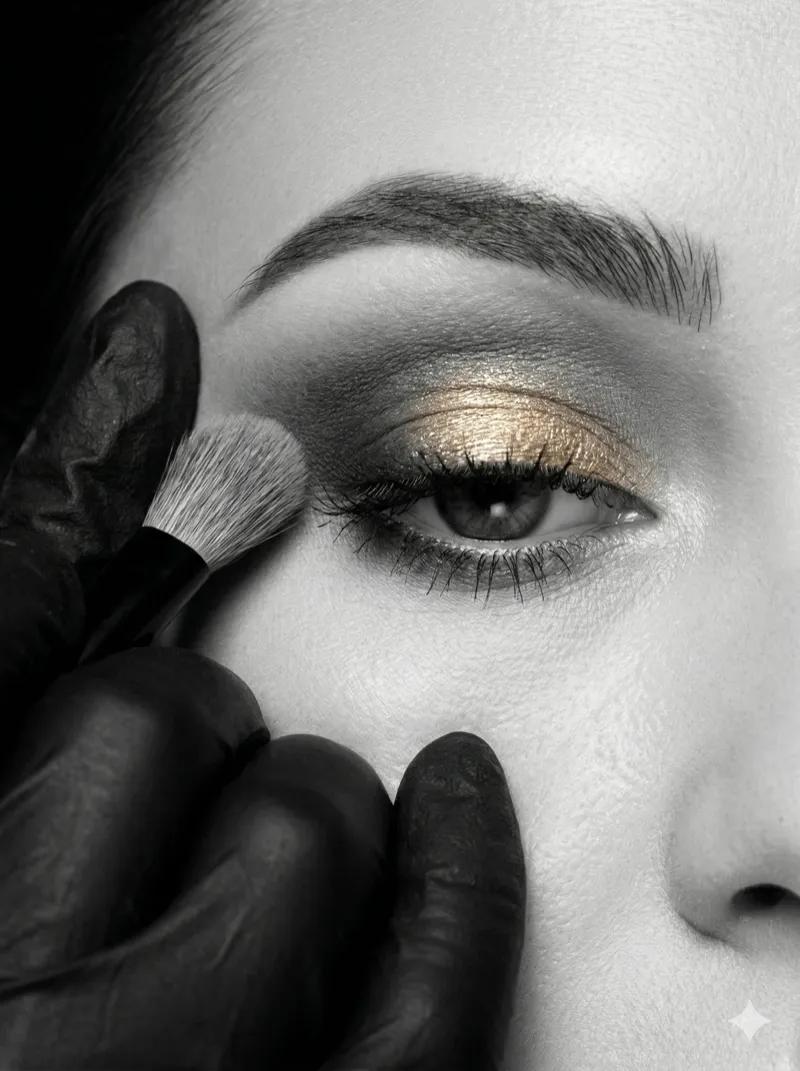
Eyeshadow and eyeliner techniques for 7 eye shapes. Comparison table and common mistakes by type.
How to identify your eye shape in 5 key points
78% of women apply eyeshadow without knowing their actual eye shape, which reduces the impact of their makeup by up to 40% according to professional makeup trainers. Correctly identifying your eye shape is the first step towards mastering any technique.
Stand in front of a mirror in natural light and assess these 5 points: 1) Eyelid crease — is it visible with your eyes open or does it disappear? 2) Outer corner — does it point upwards, downwards or is it level with the inner corner? 3) White proportion — can you see white above or below the iris? 4) Distance between eyes — does the width of one eye fit between them, more or less? 5) Depth — hold a pencil horizontally across the brow bone; if the eye sits behind it, your eyes are deep-set.
At our studio in Gandía we carry out this assessment before every professional makeup session to ensure a personalised result.
The 7 eye shapes: specific eyeshadow and eyeliner techniques
There are 7 recognised eye shapes in professional makeup, and each requires a different placement of eyeshadow, eyeliner and mascara to maximise its potential. Below you will find the correct technique and the most common mistake for each shape.
| Shape | Eyeshadow | Eyeliner | Common mistake |
|---|---|---|---|
| Almond | Blend into the outer V without limits | Classic wing following the natural line | Unnecessary excess product |
| Round | Darken the outer corner to elongate | Extended wing beyond the eye | Lining the entire lower lash line |
| Downturned | Lift dark shadow above the outer crease | Ascending wing at 45° | Following the natural droop with the wing |
| Deep-set | Light shades on the mobile lid, dark only in the crease | Thin line, never thick | Dark shadow on the mobile lid |
| Hooded | Apply with eyes open, shadow above the visible crease | Thin wing visible with the eye open | Applying makeup with eyes closed |
| Wide-set | Darken the inner corner to bring eyes closer | Start the liner from the inner corner | Extending the outer corner too far |
| Close-set | Highlight the inner corner, darken the outer | Start the liner from the centre of the eye | Darkening the inner corner |
Almond eyes are considered the most versatile shape because they suit virtually any style without correction. All other shapes need specific adjustments to balance proportions.
Detailed technique for hooded and downturned eyes
Hooded eyes account for approximately 35-40% of makeup consultations at our studio, making them the shape that causes the most frustration. The upper eyelid partially or fully covers the crease, causing eyeshadow to vanish when the eyes are open.
The correct technique requires applying makeup with your eyes open, looking straight ahead. Apply transition shadow just above where the hood ends, so that the colour remains visible. Use long-wearing primers because the friction between the eyelids wears off product faster — a good primer extends wear time from 3 to 8 hours.
For downturned eyes, the goal is to create visual lift. Sweep dark shadow diagonally upwards from the outer corner. The eyeliner should be a short but upward-angled wing, never following the natural downward slope. A professional trick: apply adhesive tape as an angle guide before blending.
If you have downturned or hooded eyes and would like to learn the technique adapted to your face, book a makeup session in Gandía where we teach you step by step.
Universal mistakes that ruin eye makeup
5 out of 10 eye makeup mistakes are caused by not preparing the eyelid properly before applying colour, according to professional makeup training data. The base matters more than the palette you use.
Mistake 1: Skipping primer. Without primer, eyeshadow creases within 2 hours. An eye-specific primer creates a smooth, adherent surface. Mistake 2: Not blending transitions. Hard lines between colours age the eyes; spend at least 30 seconds blending each transition with a clean brush. Mistake 3: Full lower liner. Lining the entire lower lash line makes the eye look 20-30% smaller visually. Limit it to the outer third.
Mistake 4: Mascara only on upper lashes. A light coat on the lower lashes opens up the eye. Mistake 5: Ignoring the brows. Well-designed brows frame the eye and multiply the effect of makeup. At Adrian Beauty Studio we offer Unlimited Brows for 10 per month to keep them always perfect.
Essential products and correct application order
A complete eye makeup look requires between 6 and 8 products applied in a specific order that maximises wear time and visual impact. Altering the order is one of the most frequent mistakes, even amongst experienced wearers.
The correct order is: 1) Eye primer on a clean, moisturised lid. 2) Transition shade (medium matte tone) in the crease. 3) Dark shade in the outer V and outer crease. 4) Light or shimmer shade in the centre of the mobile lid. 5) Highlighter on the brow bone and inner corner. 6) Upper eyeliner. 7) Lower eyeliner (outer third). 8) Mascara in a zigzag motion from the roots.
For special occasions or if you need a professional finish, explore our makeup services in Gandía and makeup services in Ontinyent.
Frequently asked questions about eye makeup by shape
Can I have a combination of two eye shapes?
Yes, it is very common. Approximately 30% of people have eyes with mixed characteristics, for example almond-shaped with a hooded tendency. In these cases, techniques from both shapes are combined, prioritising the more dominant feature. A professional can assess your specific case and design a tailored technique.
Does eye makeup change with age?
From around 40 years of age, the eyelid skin loses elasticity and many eyes develop a hood that was not there before. This requires adapting your technique: less product, satin textures rather than matte, and primer as a must. Shadows with excessive shimmer emphasise fine lines, so champagne tones are preferable to glitter.
How long does properly applied eye makeup last?
With primer and quality products, professional eye makeup lasts between 8 and 12 hours without touch-ups. Without primer, the average drops to 3-4 hours. Factors such as oily eyelids, ambient humidity and formula type (cream vs powder) directly affect wear time. Pressed powders perform better on oily skin.
Is it necessary to use specific brushes for each area?
Using at least 3 different brushes (a flat one for application, a crease brush for blending, and a fine one for lining with shadow) noticeably improves results. A single brush mixes colours and removes definition. Synthetic brushes work better with cream formulas, and natural ones with powders. Clean your brushes every 7-10 days to prevent bacteria build-up.
Can I use the same products for any eye shape?
The products can be the same — what changes is WHERE you apply them. A burgundy tone goes in the outer V for round eyes, across the whole lid for deep-set eyes, or above the hood for hooded eyes. The palette does not define the result: placement does. A basic kit of 4 shadows (light, medium, dark, shimmer) covers all shapes.
How do I know if my eyes have changed shape with age?
The bone structure does not change, but the skin does. From around 40-45 years of age, collagen loss can turn a visible eyelid into a partially hooded one. If you notice that the techniques that always worked for you no longer give the same result, your shape has probably evolved. Adapt your technique: raise the shadow 2-3 mm higher than usual and prioritise waterproof formulas that do not migrate into the crease.
Do false lashes or lash lifts change the perception of eye shape?
Yes, noticeably. Lashes curled upwards open up the eye and counteract the effect of downturned or hooded eyes. A lash lift with tint maintains that effect for 6-8 weeks without daily mascara, simplifying your makeup routine and enhancing the results of any eyeshadow technique.