Gel nails lifting: common causes and how to prevent it
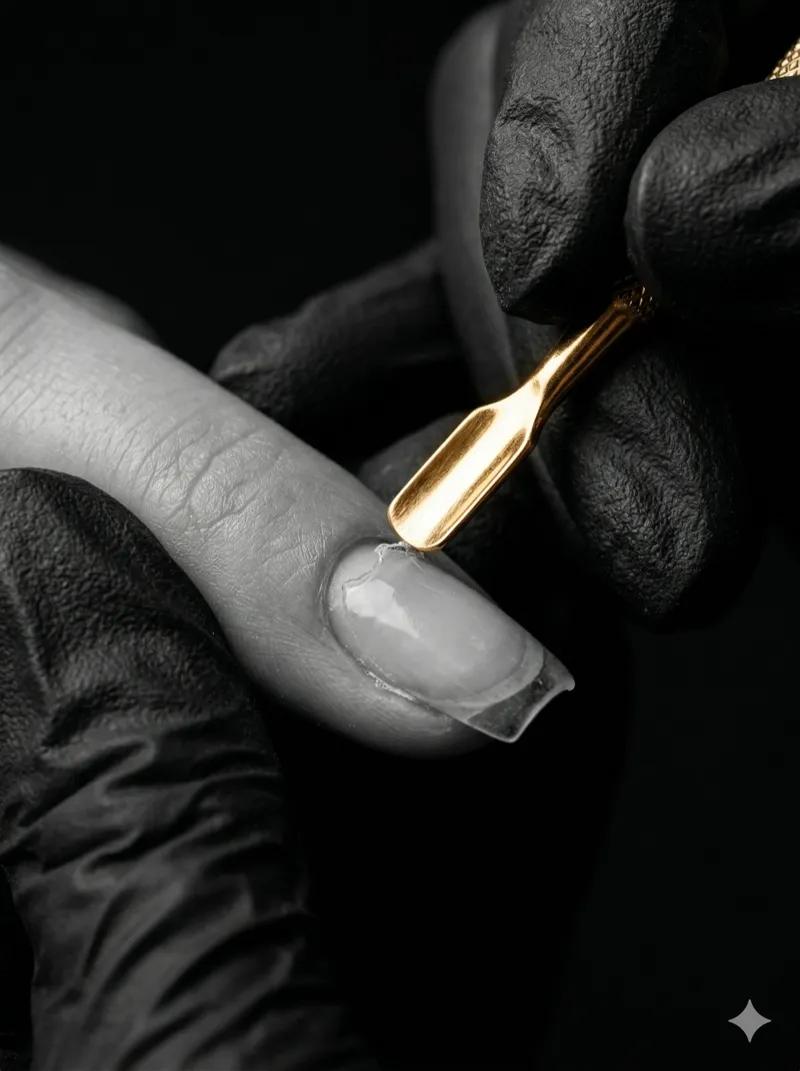
Up to 35% of clients who wear gel nails see them lifting before three weeks, and most cases come down to technique or aftercare problems that are entirely avoidable.
Up to 35% of clients who wear gel nails see them start lifting before the three-week mark, and most of those cases come down to technique or aftercare problems that are entirely avoidable. This guide walks you through the 7 most common reasons gel nails lift, what to do if it has already happened and how to prevent it with the right care. If you prefer a lighter option, see our gel polish in Gandia and gel polish in Ontinyent.
What gel nail lifting is and why it happens
Lifting is when the cured gel separates from your natural nail plate. It can be partial (one edge or side comes away) or total. That gap traps moisture and dirt, which weakens the natural nail and, if left for too long, can leave whitish marks under the product.
Gel bonds properly when the nail plate is free of oil, moisture and debris, when the prep has been done thoroughly and when the gel has been fully cured under a UV or LED lamp. If any of those fail (incomplete prep, layers that are too thick, under-curing), lifting is the most direct result.
Industry figures suggest that up to 35% of clients experience early lifting for avoidable reasons, all of them linked to technique or aftercare. Our complete guide to gel nails covers the basics of the product and its different types. This article focuses solely on diagnosing and fixing lifting, a specific problem that deserves its own explanation.
7 main reasons gel nails lift
In our experience at the nail desk, 70% of lifting starts during the prep or the application itself, not with aftercare. The causes below are listed from most to least common.
Poor prep of the natural nail
Preparing the nail before applying gel is the most critical step of the whole process. It means cleansing the nail plate with a dehydrator, gently buffing the surface with a low-grit file (180 grit) and removing any cuticle that has crept onto the nail plate. If the surface still carries natural oils and dead skin, the gel base has nothing to grip.
A dehydrator containing isopropyl alcohol removes the oils that act as a chemical barrier between gel and keratin. Skipping this step, or rushing it, is the cause we see most often when nails lift early, especially in the first 48-72 hours after the appointment.
Too much moisture or oil on the nail plate
Gel won't bond properly if the nail plate is damp or oily when it is applied. That happens when you've had your hands in water just before your appointment, put on hand cream without mentioning it, or have very porous nails that hold moisture inside.
The professional fix is always to finish the prep with a dehydrator. For nails prone to moisture or repeated lifting, a rubber base is a particularly effective alternative: its flexible formula moves with your natural nail and reduces the stress points that make the sides or tip lift.
Gel applied onto the cuticle or side walls
Gel that touches the cuticle or the side folds of the nail creates a lever. Once cured, that excess acts like a wedge, prising the gel up from the edge towards the centre and causing the classic side lifting that spreads over time.
Good technique leaves a free margin of 0.5 mm between the product and the skin all the way round. Keeping that margin takes practice and good lighting at the nail desk, but it is one of the biggest factors in how long the result lasts.
Gel layers that are too thick or uneven
Each layer of gel should ideally be between 0.5 and 1 mm thick. A layer that is too thick doesn't cure evenly: the outside sets first while the inside stays slightly soft, creating an unstable layer that makes lifting easier over time.
Uneven layers also create areas of different tension. Where the gel is thinner, it cures fully and bonds well; where it is thicker, curing is incomplete. Professional technique always favours thin, even layers (2 or 3, depending on the look you want) rather than trying to build all the volume in one go.
Under-curing with a UV or LED lamp
Under-curing means the gel hasn't fully polymerised. It happens when the time under the lamp is too short, when the lamp has lost power with wear, or when the hands aren't positioned properly under the light. Under-cured gel keeps a layer with no real adhesion, and that weak spot is where lifting begins.
Standard curing time is 30 to 60 seconds per layer with a 48 W LED lamp. Traditional UV lamps need between 120 and 180 seconds per layer. A lamp whose bulbs have been used for more than 200 hours can lose 30-40% of its effective power, which compromises curing even if you follow the manufacturer's timing. In a professional salon, lamps are checked and calibrated regularly.
Long contact with water in the first 48 hours
The first 48 hours after your appointment are when gel nails are most vulnerable. Although the gel is cured, the bond between the product and the nail plate needs that time to set completely. Soaking your hands (swimming pool, bath, washing up without gloves) puts pressure on the tiny edges and can weaken the bond before it has fully settled.
Our advice is simple: avoid soaking your hands for the first 24-48 hours, and wear rubber gloves for household jobs involving water for at least the first week after your appointment.
Incompatible or out-of-date products
Not all gels work together. Pairing one brand's base with another brand's top coat, or mixing systems without checking the manufacturer's compatibility, can leave a weak bond between layers and speed up lifting from within. The same goes for products past their expiry date or that have thickened after exposure to direct light or heat.
In a professional salon, products are chosen to work as a system and replaced according to their expiry dates. This problem is far more common with DIY kits at home than in the salon, where stock is checked and rotated systematically.
How to stop gel nails lifting: professional prevention
Preventing lifting combines the right technique in the salon with good habits at home. At our Gandia salon, the prep routine always includes a gentle surface buff (180 grit), pushing back and cleaning the cuticles, dehydrating with isopropyl alcohol and a bonding primer before the gel base.
A base coat that is properly applied and fully cured improves overall adhesion by up to 40% compared with skipping or rushing this step. Adding a flexible rubber base gives an extra cushioning layer that absorbs the natural movement of the nail and reduces breaks caused by uneven tension.
The home habits that make the biggest difference:
- Wear gloves for washing up and household jobs involving water for as long as you have your manicure on.
- Apply cuticle oil every 2-3 days to keep the skin around the nail moisturised without affecting the gel.
- Don't use your nails as tools to open cans, peel off stickers or scrape surfaces.
- Avoid acetone and strong solvents on your gel nails.
For a complete routine to look after your natural nails between appointments, our guide to natural nail care has detailed advice on products, diet and helpful habits.
What to do if a gel nail partly lifts
When a gel nail lifts at the side or tip, the instinct is to pull the loose gel off. Doing that tears away layers of keratin from your natural nail, making it thinner and weaker each time. The more often it happens, the more structural damage builds up in the nail plate.
What to do if a gel nail partly lifts:
- Don't pull at the lifted gel or try to stick it back down with nail glue or superglue: you would seal in the moisture trapped underneath and could encourage a fungal infection.
- Gently file the lifted edge if it is catching on things, to stop the lifting spreading towards the centre of the nail.
- Come into the salon for a professional repair as soon as you can: your nail technician can remove the gel from the affected area and rebuild it without harming your natural nail.
If the nail has also broken, our article on fixing broken and chipped nails explains the repair options available in the salon.
If you want to remove the gel completely, you need the right acetone and a controlled soaking time. Our article on [safely removing gel and acrylic nails](/guia/retirado-unas-gel-uñas acrílicas en Gandía) explains the process step by step and why doing it without the proper kit can seriously damage your nails. Also available: acrylic nails in Ontinyent.
When to visit a professional beauty salon in Gandia or Ontinyent
Not every case of lifting needs an urgent visit, but some situations do: when 2 or 3 nails or more are lifting at the same time, when you notice a greenish or yellowish colour under the gel (a possible sign of fungal infection), when the problem comes back after every set despite following the aftercare, or when there is pain, swelling or tenderness around the nail. If you notice any of these signs, it is always safest to get professional advice.
At our Ontinyent salon, a check-up appointment lets us work out whether the problem is technical (in which case we fix it in the same session) or comes from the condition of your natural nail and needs a different approach. In many cases, switching to a rubber base or to a more flexible gel and polygel system stops the lifting for good.
Clients from la Safor and the Vall d'Albaida who come to our salons in Gandia and Ontinyent can enjoy the full gel nail service, with professional prep, at both locations.
Gel nails lifting: frequently asked questions
How long should gel nails last without lifting?
Gel nails applied with the right technique and properly looked after should last 3 to 4 weeks without lifting. That is the standard gap between your application appointment and your next infill. Lifting within 10-14 days is a clear sign of a technical problem (incomplete prep, under-curing) or of aftercare issues, such as long contact with water in the first 48 hours. From the fourth week onwards, natural growth leaves a visible gap at the cuticle and the lever effect increases the risk of lifting, so an infill is a good idea even if the gel still looks perfect. Our guide everything about gel nails in 2026 has up-to-date information on maintenance cycles.
Can I glue a lifted gel nail back down at home?
We don't recommend sticking lifted gel down with household adhesives. Nail glue or superglue seals the gap between the gel and the natural nail, but it doesn't restore the original bond. The result is a sealed pocket that traps moisture between the gel and the nail plate and can, in some cases, encourage fungal infections. The right solution is a quick repair at the salon: your nail technician removes the product from the affected area, preps the surface again and rebuilds it without compromising the rest of the nail. If several nails are lifting, it is usually best to consider a full removal and a fresh set with the right prep.
Does peeling off gel nails damage the natural nail?
Gel removed properly (acetone with foil wraps, soaking for 15 to 20 minutes) does not significantly damage the natural nail. Damage happens when the gel is forced off: it takes the top layers of keratin with it, leaving the nail thin, overly bendy and uneven. The more often you peel it off, the more damage builds up. If your nails show visible signs of wear (rough surface, unusual flexibility, brittleness), our article on fully removing gel and acrylic nails explains how to manage recovery safely and gradually.
How often should I have my gel nails infilled?
Standard gel maintenance is every 3 to 4 weeks. At that appointment we fill in the new growth, check the product along every edge and fix any early lifting before it spreads. Leaving it longer than 4 weeks increases the risk of lifting because of the lever effect of natural growth; coming in before 3 weeks isn't usually necessary unless a nail breaks or lifts. The exact timing depends on how fast your nails grow and on the kind of work or household tasks you do every day.
Does diet affect how well gel nails stick?
Your diet affects the quality of your natural nail, which in turn affects how well the gel bonds to it. Brittle, flaky nails or nails with horizontal ridges can point to a lack of biotin, iron, zinc or protein. On a weakened nail plate, the gel has less healthy keratin to grip and tends to lift before the usual cycle. Not drinking enough water also dries out the nail plate, making it more porous and unstable. Our guide to natural nail care goes into more detail on the link between nutrition, hydration and healthy nails. If your nails stay weak or brittle, it is worth seeing a health professional to rule out an underlying cause.
Why do gel nails lift at the sides?
Side lifting is one of the most common types and has a precise technical cause: the gel touched the skin of the side fold during application. Once cured, that point of contact acts as a lever and lifts the gel from the side towards the centre of the nail. It can also happen if the edges weren't filed properly during prep or weren't fully dehydrated. Side lifting that keeps happening on the same nails usually means the application technique needs adjusting to the shape of those nails, which may be narrower, more curved or have deeper folds than usual.
Is it normal for gel nails to lift after a week?
No, it isn't. Lifting in the first 7 days points to a problem with prep (the surface wasn't properly dehydrated or the cuticle wasn't fully removed) or with curing (not enough time under the lamp, or a lamp that has lost power). It can also be caused by long contact with water in the first 48 hours after your appointment. If it keeps happening, the most effective step is to tell the salon exactly what you've noticed so your nail technician can review the routine used at that appointment. Often, adding a stronger-bonding rubber base or adjusting the curing time per layer solves the problem without changing product or system.
If your gel nails keep lifting, or you simply want a long-lasting set from the start, booking an appointment that includes a check of your natural nails is the best place to begin.
At Adrian Beauty Studio in Gandia and at our Ontinyent salon, our gel and polygel nail service includes a complete prep routine designed to make your nails last from the very first layer. The appointment covers everything from preparing your natural nails to the final seal and cure.
Quick reference: types of manicure
| Type | Lasts | Appointment | Adds length? |
|---|---|---|---|
| Gel polish | 2-4 wks | 45-60 min | No |
| Semigel | 3-4 wks | 50-65 min | No |
| Gel/Polygel | 3-4 wks | 75-100 min | Yes |
| Acrylics | 3-5 wks | 80-110 min | Yes |
| OPI | 5-7 days | 30-40 min | No |