Sensitive Skin and Facial Hair Removal: Gentle Alternatives to Waxing
If your skin reacts with redness or spots every time you remove facial hair, there are methods that are kinder than conventional wax. We compare each alternative and who it suits best.
Why sensitive skin reacts more on the face
Facial skin is three to five times thinner than that on the rest of the body. In areas such as the upper lip or between the brows, the density of nerve endings is much higher. Contributing factors include topical retinoids, exfoliating acids, active rosacea or a compromised skin barrier.
The result with conventional wax: redness lasting more than 24 hours, micro-lesions, folliculitis or post-inflammatory hyperpigmentation. If this sounds familiar, there are alternatives.
Comparing 6 alternative methods
Threading
A twisted cotton thread plucks hairs one by one. No products, no heat, no chemicals. Exceptionally precise for brows and upper lip. Brow session: 10-20 minutes. Post-treatment redness is minimal (30-60 minutes).
Best for: brows, upper lip, sideburns. Duration: 3-4 weeks. Contraindication: active acne with pustules.
Low-temperature wax
Applied at 37-40 degrees C (versus 55-65 degrees C for conventional wax). Formulations with titanium dioxide or azulene for a soothing effect. Adheres more to the hair than to the skin. In a professional salon, it is adapted to each skin type.
Best for: upper lip, cheeks, chin. Duration: 3-5 weeks. Contraindication: active retinoids or recent sunburn.
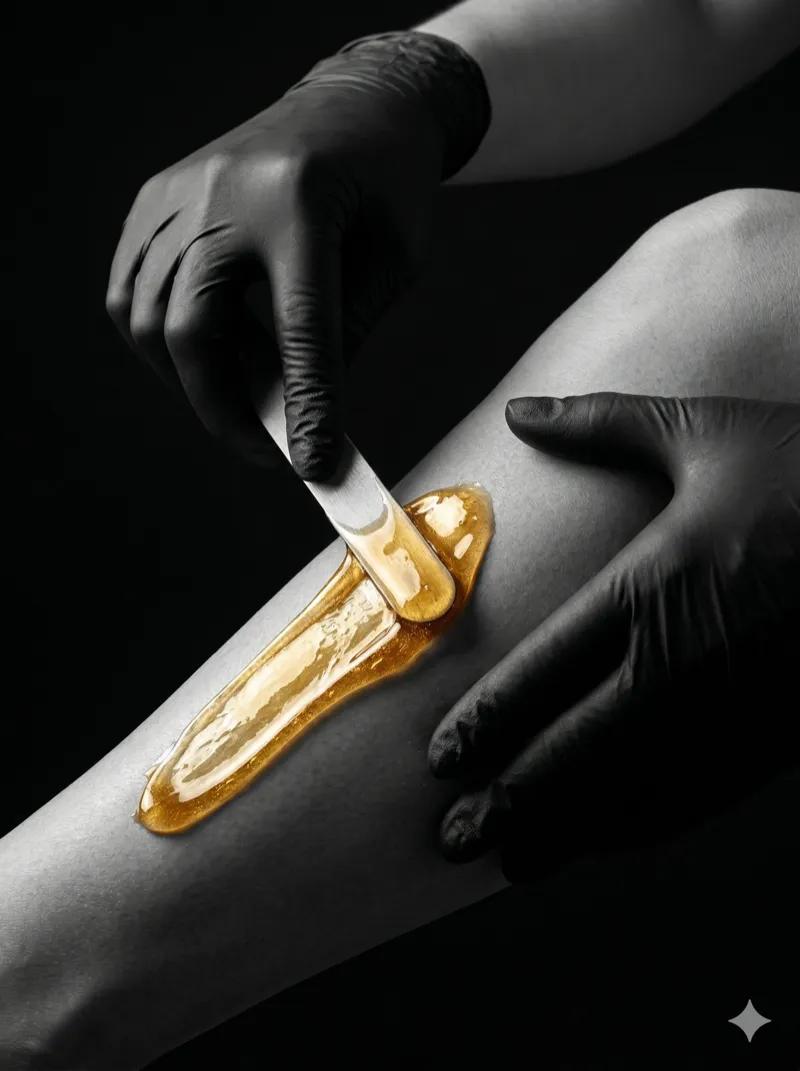
Sugaring (sugar paste)
A paste made from sugar, water and lemon. Applied at body temperature. Removed in the direction of hair growth (less breakage). Water-soluble: residue washes off with water.
Best for: upper lip, chin. Duration: 3-5 weeks. Contraindication: citrus allergy, active eczema.
Dermaplaning
A surgical blade held at 45 degrees shaves the vellus hair at skin level while exfoliating. No pulling, no heat, no chemicals. Result: smooth, luminous skin. Not suitable for coarse terminal hair.
Best for: cheeks, forehead, sideburns with fine hair. Duration: 2-4 weeks. Contraindication: inflammatory acne, papulopustular rosacea.
Tweezers
The most precise method. Ideal for brow shaping and isolated hairs. Key: pull in the direction of growth with quality slanted tweezers.
Best for: between the brows, brow touch-ups. Duration: 3-6 weeks. Drawback: slow for larger areas.
Facial depilatory creams
Calcium thioglycolate dissolves keratin. Painless but carries a chemical risk: contact dermatitis, stinging. A 48-hour patch test beforehand is mandatory.
Best for: upper lip when mechanical methods are not tolerated. Duration: 1-2 weeks. Contraindication: dermatitis, rosacea, retinoids.
Preparing sensitive skin
- 48 hours before: stop retinoids, glycolic acid, vitamin C and exfoliants.
- 24 hours before: avoid prolonged sun exposure on the area.
- On the day: clean, dry skin with no make-up or cream.
- Tell your therapist about any medication, recent treatments and previous reactions.
Post-hair-removal care: the first 48 hours
- First 2 hours: do not touch. Apply calming cream with aloe, bisabolol or panthenol.
- First 12 hours: no make-up on the area.
- First 24 hours: no intense exercise, saunas or swimming pools. Mineral SPF 50 if going outdoors.
- First 48 hours: no exfoliation.
If folliculitis appears, do not squeeze. Apply a cold compress and consult a professional if it has not improved in 48-72 hours.
Mistakes that worsen sensitivity
- Removing hair on the day of an event. Schedule at least 2 days beforehand.
- Switching methods every month. Choose one, give it 3 sessions and then assess.
- Ignoring the menstrual cycle. Sensitivity is higher in the days before your period. Book between days 7 and 14.
- Not mentioning a history of cold sores. Mechanical trauma can reactivate the virus.
- Using 'calming' products that contain alcohol denat. This destroys the lipid barrier.
What about laser hair removal?
It permanently reduces hair but is not 'gentle' in the short term. It requires 6-10 sessions every 4-6 weeks. During the course you can only shave, not pluck. It is a long-term investment, not an immediate alternative.
At Adrian Beauty Studio we always adapt the type of wax and technique to each skin profile. If your skin is sensitive, we assess it before we start. Book a consultation at our Gandia and Ontinyent salons.
Frequently asked questions
Can I wax my face if I use retinol?
Yes, but stop using the product 5-7 days beforehand. Retinoids thin the stratum corneum and wax can pull away skin along with the hair.
Does facial hair grow back thicker after removal?
Not with methods that pull from the root. With dermaplaning or creams you may notice a slightly coarser texture on regrowth, but the actual thickness does not change.
How long does redness last on sensitive skin?
Threading/tweezers: 30-90 minutes. Low-temperature wax: 2-6 hours. Conventional wax on reactive skin: up to 24+ hours. If it persists beyond 48 hours, seek professional advice.
Is dermaplaning safe with rosacea?
For erythematotelangiectatic rosacea (redness without spots): possibly, with an experienced professional. For papulopustular rosacea: contraindicated.
Can brows be maintained with tweezers alone?
Absolutely. It takes more time (5 minutes every 3-4 days) but it is the gentlest option. At our brow shaping service in Gandia and Ontinyent we adapt the technique if your skin is reactive.