Wax Burn on the Skin: First Aid and Recovery
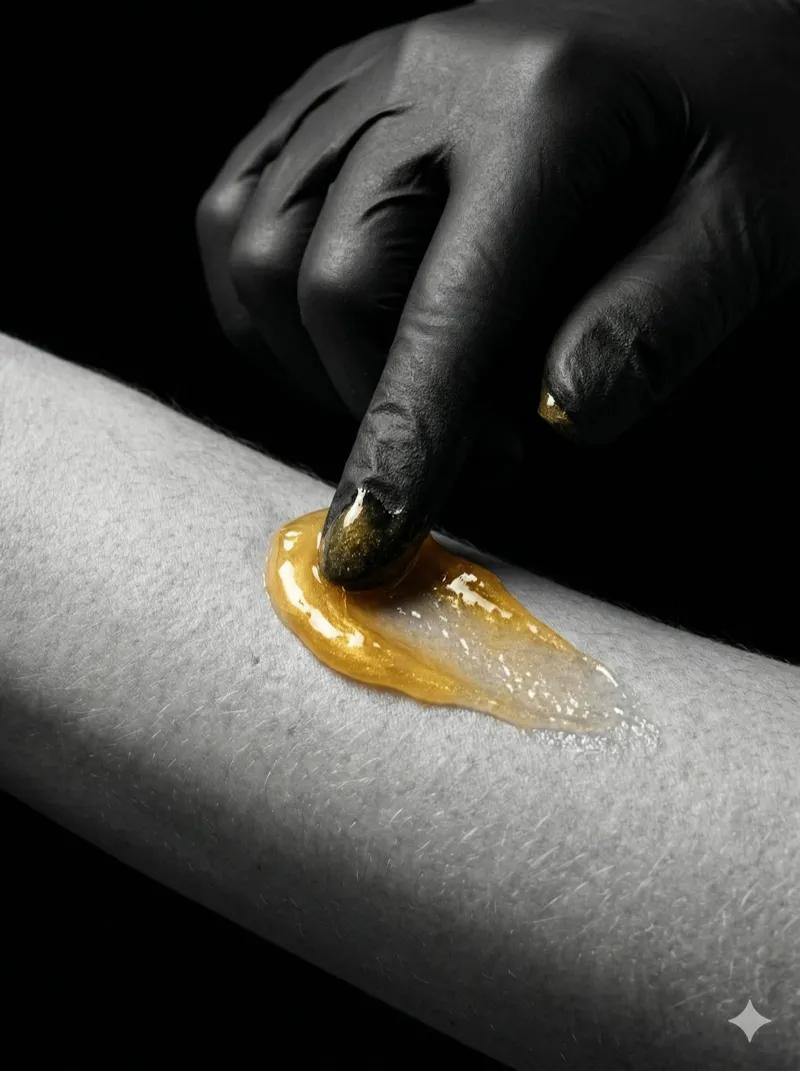
A complete guide to dealing with a wax burn: how to identify the degree, immediate first aid, home treatment and when to see a doctor.
The wax is too hot, you feel an intense sting and when it is removed the skin is red or even blistered. This is more common than it seems, and what you do in the first few minutes makes the difference between a passing discomfort and a mark that takes weeks to fade.
Why wax burns happen
Hot wax is normally applied at between 37 and 45 degrees C. Above 50 degrees C it can cause a thermal burn within seconds. The most common causes: overheating in a microwave, warmers without a thermostat and applying without testing on the wrist first.
Skin does not react equally everywhere. The upper lip, bikini line, underarms and inner thighs are particularly sensitive. Medications such as topical retinoids or isotretinoin also increase vulnerability.
How to identify the degree of the burn
First degree (superficial)
The most common. Red skin, stinging, no blisters. Recovery in 3-7 days.
Superficial second degree
Small blisters (0.5-2 cm) with clear fluid. Notable pain on contact. Healing: 10-21 days.
Deep second degree or third degree
Rare with wax. Whitish or waxy skin. Requires urgent medical attention.
First aid: the first 10 minutes
- Remove wax residue with vegetable oil. Do not pull dried wax off.
- Cool with lukewarm-to-cool running water (15-20 degrees C) for 10-20 minutes. Do not apply ice directly.
- Do not apply toothpaste, butter or vinegar.
- Pat dry gently.
- Apply a repair cream: pure aloe vera, 5% panthenol or centella asiatica.
Home treatment (days 1-7)
- Wash with a soap-free cleanser or alcohol-free micellar water, morning and evening.
- Repair cream 2-3 times a day.
- If a blister appears: do not pop it. If it bursts on its own, clean with saline solution and cover with a hydrocolloid dressing.
- SPF 50+ from day one (crucial for 3 months).
- Loose cotton clothing over the area.
What NOT to do
- No make-up or self-tanner on the burn.
- Do not wax the area for a minimum of 4 weeks.
- No exfoliants or acids for 2 weeks after healing.
- No direct sun, sauna or chlorinated pool for the first week.
When to see a doctor
- Burn larger than your forearm (>3% of the body).
- Large blisters (>3 cm) or multiple clustered blisters.
- Burn on the face, genitals, hands or joints.
- Signs of infection: pus, fever, red streaks.
- White, waxy or charred skin.
- Pain that does not subside with paracetamol or ibuprofen within 48 hours.
Sensitive areas: special considerations
Face
Fragrance-free repair cream and mineral sunscreen. Avoid make-up until the redness has cleared.
Bikini line
Loose cotton underwear; avoid exercise for 48-72 hours. For a safe bikini wax, temperature control is fundamental.
Underarms
No deodorant (containing alcohol or aluminium) for 3-5 days.
Recovery timeline
- Hours 0-6: Peak redness, stinging.
- Days 1-3: Starts to subside. Blisters appear within 12-24 hours if second degree.
- Days 4-7: Flaking, pinkish skin. Itching is a good sign.
- Weeks 2-4: Texture recovers. Temporary tone difference possible.
- Months 1-3: Area remains more sensitive. Keep up SPF.
Prevention
Temperature control
- Always use a warmer with an adjustable thermostat.
- Hot wax: 37-45 degrees C. Hard wax: 45-55 degrees C.
- Test on the wrist before every application.
Skin preparation
No retinoids or exfoliants 48 hours beforehand. If it is your first time waxing, let your therapist know.
The professional factor
In a professional salon, the warmer has a calibrated thermostat and the therapist checks the temperature before every application. If you are looking for waxing in Gandia or Ontinyent, at Adrian Beauty Studio we work with temperature-controlled waxes.
Possible complications
Post-inflammatory hyperpigmentation
More common in darker skin tones. Daily SPF is the most effective measure.
Secondary folliculitis
Inflamed spots as the hair grows back. Do not squeeze. More information in our post-waxing folliculitis guide.
Frequently asked questions
Can I apply ice directly to the burn?
No. Direct ice causes extreme vasoconstriction and can worsen the damage. Use running water at 15-20 degrees C for 10-20 minutes.
How long does a wax burn take to heal?
First degree: 3-7 days. Superficial second degree: 10-21 days. Residual hyperpigmentation may take an additional 1-3 months.
Can low-melting-point wax also burn?
Yes, although the risk is lower. It is applied at 35-42 degrees C, but if overheated it is equally dangerous.
How long should I wait before waxing again?
A minimum of 4 weeks after complete healing. If there was hyperpigmentation, wait until the skin tone has evened out.
Do wax burns leave scars?
First-degree burns do not. Second-degree burns may leave a temporary mark. Only deep burns carry a risk of permanent scarring. Rigorous SPF and repair creams are the factors that make the biggest difference.
Does aloe vera straight from the plant work?
Yes, but avoid the yellowish sap (aloin), which is irritating. Rinse the clear gel well before applying. Pharmacy-grade gel without alcohol is safer and more consistent.
Note: this guide is for informational purposes. If in any doubt about the severity of a burn, always consult a healthcare professional.