Ingrown Toenails: Causes, Prevention and When You Need a Professional
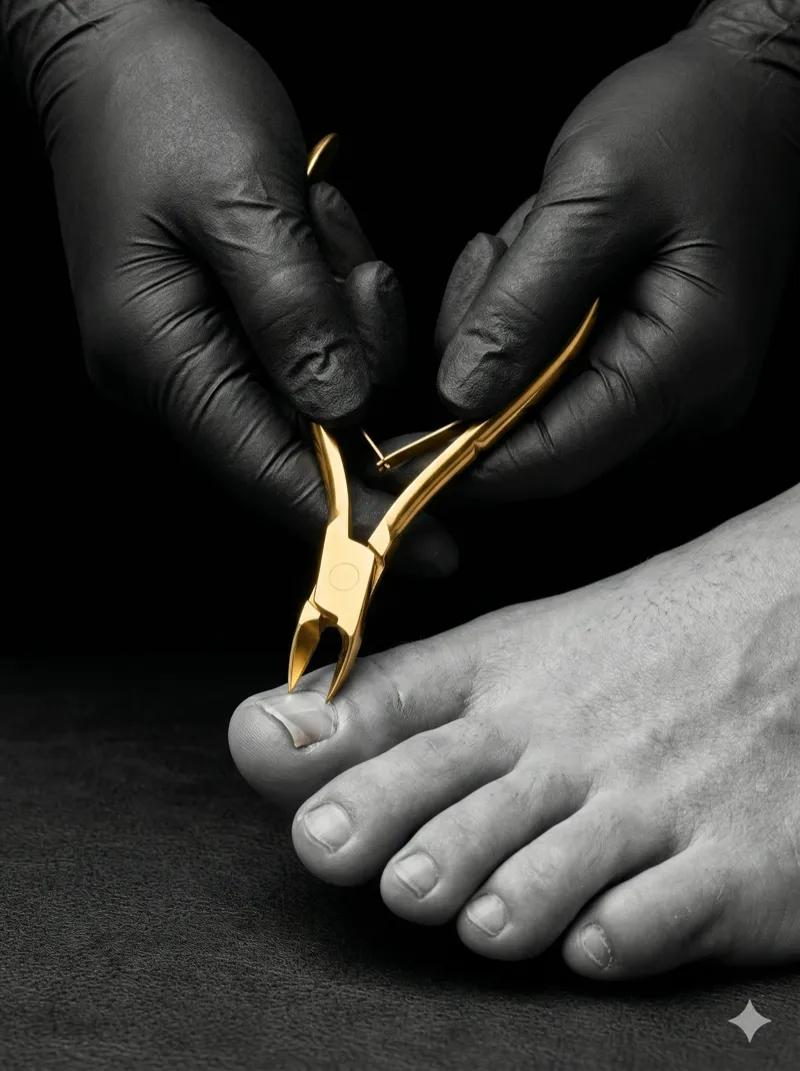
Ingrown toenails affect 1 in 5 people. Causes, prevention with a straight cut, and when to see a podiatrist.
What is an ingrown toenail and why does it happen
An ingrown toenail, or onychocryptosis, is a condition in which the lateral edge of the nail plate penetrates the soft tissue of the periungual groove, causing pain, inflammation and risk of infection. It affects 18% of the adult population according to the Spanish Journal of Podiatry, with the big toe involved in 85% of cases. The main cause is incorrect nail trimming: cutting the edges into a curved shape rather than straight forces the nail to grow inwards. Other factors include narrow or pointed footwear that exerts constant lateral pressure, genetic predisposition to curved nails (pincer nails), plantar hyperhidrosis that softens the tissues, and repetitive trauma such as that experienced by athletes. Onychocryptosis has three clinical grades with differentiated treatments.
Severity grades and symptoms
Grade I is characterised by mild erythema, oedema and pain when pressing the nail edge — it affects 60% of cases and responds well to conservative treatment without surgery. Grade II presents active infection with purulent discharge, granulation tissue and pain even at rest; it requires professional podiatric treatment with possible topical antibiotic. Grade III is the chronic phase with lateral ridge hypertrophy, established granuloma and nail plate deformation — it is resolved only through minor surgery (partial matricectomy) under local anaesthesia. Detecting the ingrown toenail at grade I is crucial: at this stage, a professional pedicure with proper technique can resolve the problem entirely and prevent progression to painful, complicated stages.
Table: ingrown toenail grades and treatment
| Grade | Symptoms | Pain | Treatment | Professional | Recovery |
|---|---|---|---|---|---|
| I (mild) | Redness, slight swelling | On pressure | Conservative: straight cut, wider footwear | Beauty therapist / podiatrist | 1-2 weeks |
| II (moderate) | Infection, pus, granuloma | Constant | Topical antibiotic + spiculotomy | Podiatrist | 2-4 weeks |
| III (severe) | Hypertrophy, chronic deformation | Intense | Partial surgical matricectomy | Podiatrist / surgeon | 4-6 weeks |
Prevention: 7 habits to avoid ingrown toenails
Prevention of ingrown toenails reduces incidence by 80% according to the Spanish Podiatry Association, and is based on seven fundamental habits. First, cut your toenails in a straight line without rounding the corners — use a straight-edge clipper, not a curved one. Second, do not cut too short: leave the free edge slightly beyond the lateral groove, at least 1 mm. Third, choose footwear with a wide toe box that does not compress the toes — your foot needs 1 cm of space between the longest toe and the tip of the shoe. Fourth, keep your feet dry by applying antifungal talc if you sweat excessively. Fifth, do not tear or rip your nails with your fingers. Sixth, check your feet regularly for redness or tenderness in the grooves. Seventh, schedule a monthly professional pedicure as a preventive measure.
The role of professional pedicure in prevention
A professional pedicure is the most effective tool for preventing ingrown toenails because it includes a technical cut that 73% of people cannot execute correctly at home. At Adrian Beauty Studio, the pedicure includes prior softening with a warm foot bath, straight cutting with sterilised instruments, lateral groove cleaning with a curette, removal of periungual calluses, and antiseptic application. This process not only maintains the nail in its correct shape but also allows early detection of incipient grade I cases before they cause pain. For people prone to recurrent ingrown toenails, we recommend a pedicure every 3-4 weeks — just the right frequency to keep growth under control before the edge reaches the soft tissue.
When to see a podiatrist vs a beauty therapist
The line between beauty therapist and podiatrist is defined by the presence of infection: if there is pus, granuloma or pain at rest (grade II-III), the patient should see a qualified podiatrist. A professional beauty therapist can and should manage grade I — mild redness without infection — through correct cutting, groove cleaning and education on preventive habits. In Spain, podiatry is a regulated healthcare profession requiring a four-year university degree, whilst beauty therapy operates in the cosmetic domain. Both professionals are complementary: the podiatrist treats active pathology and the beauty therapist maintains preventive foot health. At Adrian Beauty Studio we refer any case showing signs of infection to a podiatrist, ensuring our clients' safety.
Frequently asked questions
Why do I only get ingrown toenails on my big toe?
The big toe bears 40% of your body weight when walking and receives the greatest lateral pressure from footwear. Additionally, its nail is the widest and most curved, making it easier for the edges to penetrate the tissue.
Are ingrown toenails hereditary?
Genetic predisposition exists: the shape of the nail plate (pincer nail) and groove anatomy are inherited. However, the main trigger remains incorrect cutting.
Can I wear nail polish if I'm prone to ingrown toenails?
Yes, polish does not influence the development of ingrown toenails. What matters is maintaining a straight cut and proper length. Simply avoid pressing the applicator against the lateral grooves.
Can a professional pedicure cure an ingrown toenail?
At grade I, yes — correct cutting and groove cleaning resolve the problem. At grades II and III with infection, you need to see a podiatrist for clinical treatment.