Cejas Caídas o con Poco Arco: Cómo el Diseño Profesional Abre la Mirada
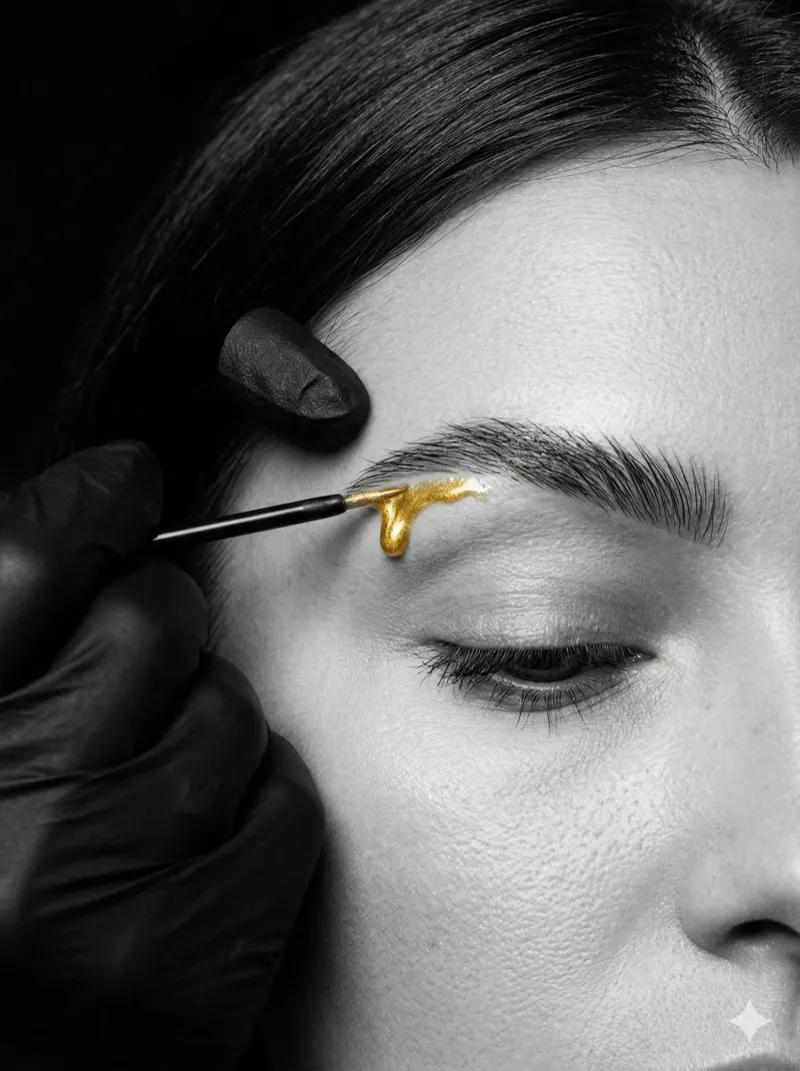
Un diseño profesional con cera, pinza y laminado puede devolver estructura y efecto lifting a cejas caídas sin cirugía.
Qué es una ceja caída y cómo identificarla
Una ceja caída es aquella cuyo punto más alto (arco) se sitúa por debajo de la línea del hueso orbital, creando una apariencia de fatiga o tristeza que no refleja el estado emocional real de la persona. Según la Sociedad Española de Medicina Estética, el 28 % de las mujeres tiene cejas naturalmente planas o descendentes, y otro 15 % desarrolla caída progresiva por envejecimiento a partir de los 40 años. La ceja ideal tiene su arco en el punto donde una línea imaginaria trazada desde la aleta nasal pasando por el borde externo del iris intersecta la ceja — si el punto más alto está por dentro de esa marca, la ceja se percibe como caída. La ceja plana, por otro lado, carece de arco definido y sigue una línea prácticamente horizontal, lo que puede crear una expresión severa o inexpresiva.
Causas de la ceja caída o plana
La genética determina la posición base de la ceja en un 70 % de los casos: la forma del hueso frontal, la inserción muscular del músculo frontal y la arquitectura del folículo son hereditarias y establecen el rango de arco posible. El envejecimiento es la segunda causa más frecuente: a partir de los 40, la pérdida de colágeno y elastina en la dermis reduce el soporte estructural de la piel periocular, permitiendo que el tejido descienda por gravedad 1-2 mm por década. La sobre-depilación crónica de la parte superior de la ceja — un error estético clásico — elimina los vellos que definen el arco, aplanando permanentemente el diseño. El uso prolongado de toxina botulínica en la frente puede debilitar el músculo frontal que eleva las cejas, provocando una caída iatrogénica. Y factores temporales como la retención de líquidos, la falta de sueño o las alergias estacionales causan inflamación que aplasta el arco visualmente.
Efecto lifting con diseño de cejas profesional
Un diseño de cejas profesional puede crear un efecto lifting visual equivalente a 3-5 años de rejuvenecimiento sin cirugía, simplemente manipulando la posición del arco y la dirección de la cola. El principio es óptico: elevar el punto más alto del arco 1-2 mm y acortar ligeramente la cola cambia la percepción de todo el tercio superior del rostro. En Adrian Beauty Studio utilizamos la técnica del golden ratio mapping adaptada a cejas caídas: medimos las proporciones faciales, identificamos dónde debería estar el arco según la anatomía individual y diseñamos depilando exclusivamente la zona inferior de la ceja. Nunca depilamos la parte superior en cejas caídas — cada milímetro de altura es valioso. Este abordaje crea un arco donde antes no existía y abre la mirada de forma natural e inmediata.
Tabla: problemas de ceja caída y soluciones técnicas
| Problema | Causa | Solución técnica | Duración | Sesiones necesarias |
|---|---|---|---|---|
| Arco plano | Genética | Depilación inferior con hilo | 3-4 semanas | Mensual |
| Cola descendente | Genética / edad | Eliminar cola baja + tinte para redibujar | 3-5 semanas | Mensual |
| Ceja uniformemente caída | Edad / ptosis leve | Laminado ascendente + diseño | 6-8 semanas | Bimensual |
| Falta de definición | Sobre-depilación pasada | Microblading con arco elevado | 12-18 meses | 1 + retoque |
| Asimetría de arco | Muscular / genética | Diseño compensatorio bilateral | 3-4 semanas | Mensual |
Técnicas profesionales para crear arco
La depilación con hilo es la técnica más precisa para crear arco en cejas caídas porque permite eliminar pelos individuales con exactitud milimétrica — imposible de replicar con cera que arrastra vellos en bloque. El proceso comienza con el mapping: trazamos el arco objetivo con lápiz dermográfico, marcamos la zona a limpiar (siempre inferior) y depilamos pelo a pelo. El tinte se aplica después en tono estratégico: más intenso en la zona del arco deseado y más suave en el inicio, creando una ilusión de profundidad y elevación. El laminado ascendente es el complemento perfecto: peina todos los vellos hacia arriba y los fija con queratina durante 6-8 semanas, maximizando la altura visual del arco. Para casos severos donde no hay suficiente vello para crear arco con depilación, el microblading permite dibujar pelos individuales exactamente donde se necesita la elevación.
Errores que agravan las cejas caídas
El 55 % de las mujeres con cejas caídas comete al menos uno de estos cuatro errores que empeoran su apariencia, según nuestra experiencia en Adrian Beauty Studio tras más de 5.000 diseños de cejas realizados. El primer error es depilar la parte superior de la ceja para crear forma: esto reduce aún más la altura y agrava la caída. El segundo error es alargar la cola excesivamente — una cola larga y descendente tira toda la ceja hacia abajo. El tercer error es usar maquillaje de cejas en línea recta: hay que dibujar siempre con dirección ascendente en la zona del arco. El cuarto error es comparar con cejas de influencers que tienen anatomías faciales completamente diferentes: el diseño de cejas debe ser individual y proporcional a cada rostro. Un profesional formado en visagismo evita todos estos errores y diseña la ceja óptima para tu estructura facial específica.
Preguntas frecuentes
¿Se puede crear arco donde no lo hay naturalmente?
Sí, con técnica profesional. Depilando la zona inferior bajo el arco deseado y manteniendo intacta la parte superior, se crea una elevación visual que simula un arco natural. El laminado refuerza este efecto.
¿El laminado de cejas ayuda con las cejas caídas?
Sí. El laminado direccional peina los vellos hacia arriba, creando un efecto lifting inmediato que dura 6-8 semanas. Es una de las técnicas más efectivas para cejas planas o descendentes.
¿A qué edad empiezan a caer las cejas?
La caída por envejecimiento comienza generalmente a partir de los 40-45 años, con un descenso de 1-2 mm por década. Sin embargo, la ceja plana genética está presente desde la juventud.
¿El microblading puede elevar una ceja caída?
Visualmente sí. El microblading permite dibujar pelos en la zona superior del arco, creando una elevación permanente (12-18 meses) que complementa el diseño con hilo.