Cómo Desmaquillarse Correctamente: Rutina Paso a Paso y Errores que Dañan tu Piel
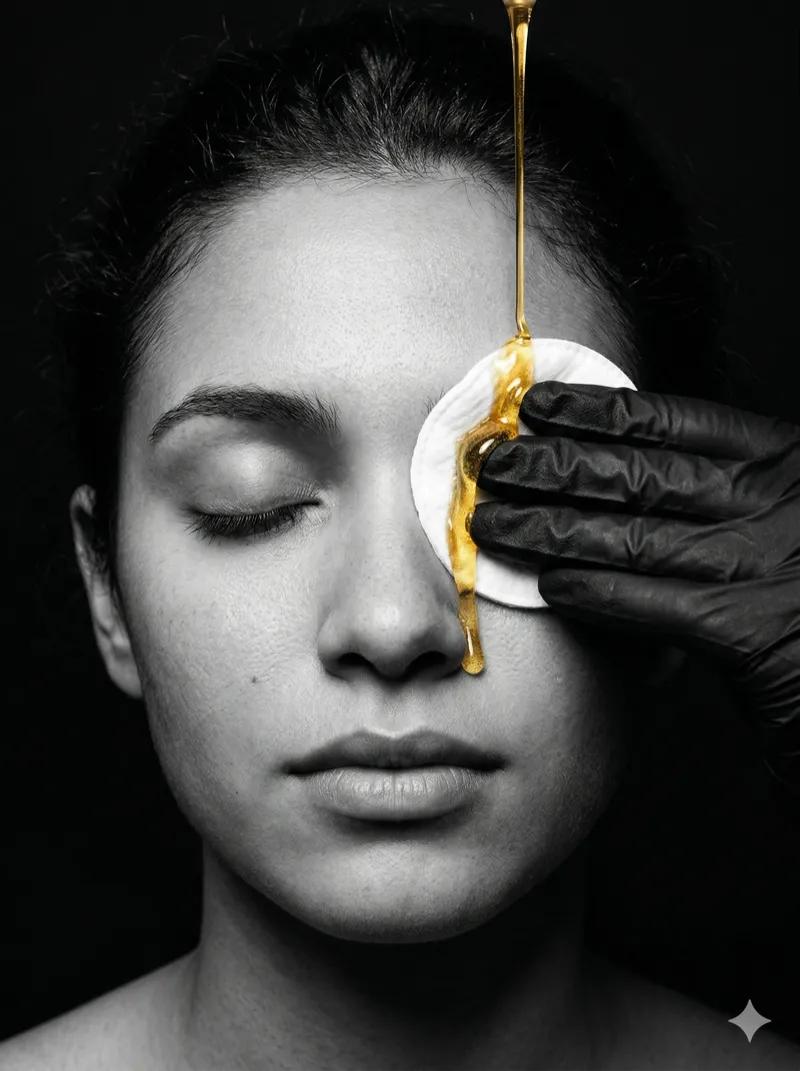
Doble limpieza explicada, productos por tipo de piel, técnica ojos y errores comunes.
La doble limpieza: por qué un solo producto no basta
El 92% de los problemas cutáneos relacionados con maquillaje se originan en una desmaquillación incompleta, no en el maquillaje en sí. La doble limpieza es un método en dos fases que elimina primero la capa lipídica (maquillaje, protector solar, sebo) y después las impurezas solubles en agua.
Fase 1 — Limpiador oleoso: un aceite, bálsamo o agua micelar bifásica disuelve el maquillaje waterproof, la base de larga duración y el SPF. Se aplica sobre piel seca, masajeando 60 segundos en movimientos circulares. El producto emulsiona al contacto con agua y se retira con facilidad. Fase 2 — Limpiador acuoso: un gel, espuma o leche limpiadora elimina sudor, contaminación y restos del primer limpiador. Se aplica sobre piel húmeda durante 30-45 segundos.
Saltarse la fase oleosa deja residuos invisibles que obstruyen poros en 48-72 horas. Saltarse la acuosa deja film graso que impide la absorción del sérum nocturno. En Adrian Beauty Studio Gandía incluimos la doble limpieza en todos nuestros tratamientos faciales.
Productos de desmaquillado según tipo de piel
Elegir el desmaquillante equivocado causa el 60% de las irritaciones post-limpieza, especialmente en pieles sensibles y reactivas. Cada tipo de piel necesita texturas y activos específicos para limpiar sin alterar la barrera cutánea.
| Tipo de piel | Fase 1 (oleosa) | Fase 2 (acuosa) | Evitar |
|---|---|---|---|
| Grasa | Aceite ligero (jojoba) o agua micelar bifásica | Gel espumoso con niacinamida | Bálsamos densos, aceite de coco |
| Seca | Bálsamo nutritivo (manteca de karité) | Leche limpiadora sin espuma | Geles espumosos con sulfatos |
| Mixta | Aceite de limpieza con emulsificante | Gel suave sin sulfatos | Productos extremos (muy grasos o astringentes) |
| Sensible | Agua micelar sin alcohol ni fragancia | Leche calmante con avena o centella | Toallitas, exfoliantes, fragancias |
| Acneica | Aceite no comedogénico (escualano) | Gel con ácido salicílico 0,5% | Aceite mineral, bálsamos pesados |
Un error común es pensar que la piel grasa no necesita aceite limpiador. Al contrario, el principio de "lo semejante disuelve lo semejante" hace que los limpiadores oleosos sean más eficaces retirando sebo oxidado que los geles acuosos solos.
Zona de ojos: técnica de presión 15-20 segundos
La piel del contorno de ojos tiene solo 0,5 mm de grosor, entre 3 y 5 veces menos que el resto del rostro, lo que la hace extremadamente vulnerable a la fricción. Frotar esta zona para retirar máscara waterproof o sombra pigmentada causa microrroturas, arrugas prematuras y pérdida de pestañas.
La técnica correcta requiere un disco de algodón empapado en desmaquillante bifásico específico para ojos. Coloca el disco sobre el ojo cerrado y presiona suavemente durante 15-20 segundos sin mover. Este tiempo permite que los solventes disuelvan el maquillaje sin fricción mecánica. Después, desliza el disco hacia abajo con un solo movimiento suave.
Para máscara resistente al agua, repite el proceso con un segundo disco limpio. Si necesitas más de dos pasadas, tu desmaquillante no es adecuado para la fórmula de tu máscara. Las pestañas naturales se debilitan significativamente cuando se frotan a diario. Usa bastoncillos de algodón para restos en la línea de agua inferior, siempre con movimientos de dentro hacia fuera.
Rutina completa de desmaquillado en 5 pasos
Una rutina de desmaquillado completa toma entre 3 y 5 minutos e incluye 5 pasos secuenciales que garantizan una limpieza del 99% frente al 70-80% de usar solo toallitas. Seguir este orden protege la barrera cutánea mientras elimina todas las capas de producto.
Paso 1 — Ojos y labios primero (60 seg): aplica desmaquillante bifásico con la técnica de presión descrita anteriormente. Retira máscara, sombra, delineador y labial antes de tocar el resto del rostro. Paso 2 — Limpiador oleoso en rostro seco (60 seg): distribuye el producto con manos secas por frente, mejillas, nariz y mentón en círculos. Paso 3 — Emulsionar con agua tibia (15 seg): añade agua y masajea hasta que el aceite se vuelva lechoso. Aclara.
Paso 4 — Limpiador acuoso en rostro húmedo (30-45 seg): aplica el segundo limpiador y masajea. Aclara con agua tibia (nunca caliente; el agua por encima de 40°C daña la barrera). Paso 5 — Secar sin frotar: presiona una toalla limpia de microfibra contra el rostro. No arrastres. Aplica tu tratamiento nocturno en los siguientes 60 segundos mientras la piel sigue ligeramente húmeda.
Errores que sabotean tu limpieza facial
7 de cada 10 personas cometen al menos 2 errores graves en su rutina de desmaquillado que anulan parcialmente el beneficio de los productos que usan. Identificar y corregir estos errores mejora visiblemente la piel en 2-3 semanas.
Usar toallitas como método único: las toallitas desmaquillantes eliminan solo la capa superficial y dejan un residuo químico que irrita. Son útiles como emergencia, no como rutina. Agua demasiado caliente: el agua por encima de 40°C elimina lípidos naturales y provoca rojeces. Usa agua tibia (30-35°C). Frotar en lugar de presionar: especialmente en ojos y mejillas, la fricción causa inflamación crónica invisible.
Saltarse la limpieza en días sin maquillaje: el protector solar, la contaminación y el sebo se acumulan igual. La doble limpieza aplica siempre que uses SPF. No limpiar la línea de nacimiento del pelo: restos de base y corrector en esta zona causan granitos recurrentes en la frente. Revisa nuestros tratamientos faciales en Gandía si tu piel necesita una limpieza profunda profesional.
La prueba del algodón: cómo verificar que tu limpieza fue completa
Existe un test de 10 segundos que revela si tu desmaquillado fue realmente efectivo: la prueba del algodón con tónico. Realizarla 2-3 veces por semana te ayuda a evaluar si tu rutina funciona o necesita ajustes.
Tras completar los 5 pasos de limpieza, empapa un disco de algodón con tónico hidratante (sin alcohol). Pásalo suavemente por frente, mejillas, nariz y mentón. Si el algodón sale completamente limpio, tu limpieza fue eficaz. Si muestra restos de color (beige de base, gris de contaminación, marrón de máscara), necesitas mejorar algún paso.
Los puntos donde más restos quedan son: aletas de la nariz (70% de los casos), línea del nacimiento del pelo (55%), y contorno de la mandíbula (40%). Si encuentras restos recurrentes en estas zonas, dedica 10 segundos extra de masaje a cada una durante el paso 2. Mantener la piel limpia es fundamental también para que los tratamientos como el tratamiento de recuperación de cejas funcionen mejor.
Preguntas frecuentes sobre desmaquillado
¿Puedo usar aceite de cocina para desmaquillarme?
Técnicamente, el aceite de oliva o de coco disuelven maquillaje, pero carecen de emulsificantes que permitan retirarlo con agua. Esto deja un residuo comedogénico que obstruye poros. Los aceites limpiadores cosméticos contienen emulsificantes que se activan al añadir agua, convirtiendo el aceite en una emulsión lechosa que se aclara por completo sin dejar film graso.
¿Es necesaria la doble limpieza si no uso maquillaje?
Sí, siempre que uses protector solar. El SPF contiene filtros que no se disuelven con limpiadores acuosos solos. Si no usas SPF ni maquillaje, un solo limpiador suave es suficiente. Sin embargo, los dermatólogos recomiendan SPF diario, lo que hace la doble limpieza prácticamente imprescindible para cualquier rutina seria de cuidado facial.
¿Las toallitas desmaquillantes son siempre malas?
No son inherentemente dañinas si se usan como primer paso de emergencia seguido de un limpiador. El problema surge cuando son el único método. Eliminan aproximadamente el 60-70% del maquillaje superficial pero dejan tensioactivos y conservantes sobre la piel. Para viajes o noches de agotamiento extremo, una toallita es mejor que dormir maquillada, pero no debería ser la norma más de 1-2 veces al mes.
¿Cuánto tarda la piel en mejorar si corrijo mi rutina de limpieza?
Los primeros cambios visibles aparecen en 7-10 días: menos brillos, poros menos visibles y textura más uniforme. La mejora completa del ciclo celular toma 28 días. Si tienes acné por mala limpieza, la purga inicial de 1-2 semanas puede empeorar temporalmente el aspecto antes de mejorar. Mantén la constancia durante al menos 6 semanas antes de evaluar resultados definitivos.