Massage During Pregnancy: Is It Safe? Positions, Benefits and Precautions
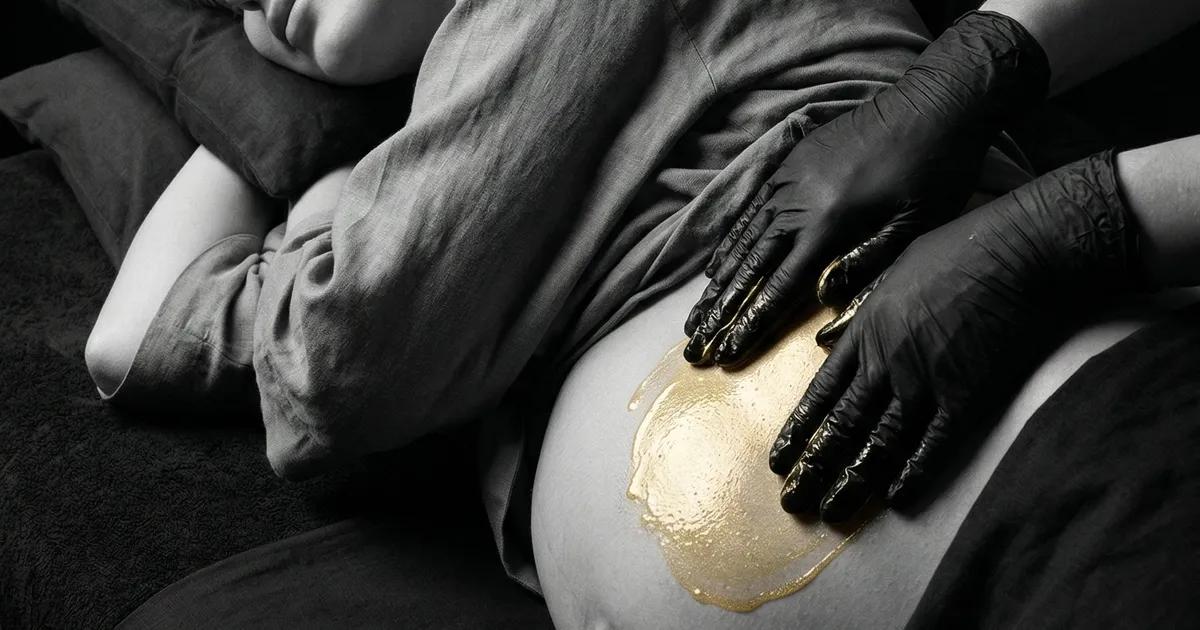
Massage during pregnancy is safe for most expectant mothers when performed by a therapist with specific training in prenatal techniques.
Massage during pregnancy is safe for most expectant mothers when performed by a therapist with specific training in prenatal techniques. The most common discomforts of pregnancy -- lower back pain, heavy legs, insomnia and anxiety -- respond notably to adapted manual therapy. This guide explains which positions are safe, what benefits it offers to both mother and baby, and when it is essential to consult a doctor before booking.
What is prenatal massage and how does it differ from a conventional massage?
Prenatal massage is a therapeutic modality designed specifically to support the physical and emotional changes of pregnancy. Unlike conventional massage, it uses lighter pressures -- generally about half the depth of a standard session -- avoids certain foot reflexology points and adapts every posture to protect the wellbeing of the expectant mother and the baby. The typical duration is around 60 minutes and it incorporates effleurage (long gliding strokes), gentle petrissage (kneading) and manual lymphatic drainage. The therapist works mainly on the back, lumbar region, hips, legs and shoulders -- the areas that accumulate the greatest tension during pregnancy. Regular prenatal massage helps lower stress and supports a sense of wellbeing. This combination explains why expectant mothers who receive regular sessions report notable improvements on both the physical and emotional planes.
Is massage during pregnancy safe?
Therapeutic massage is safe during pregnancy under two key conditions: that it is performed by a therapist trained in prenatal techniques, and that the expectant mother does not have any medical contraindications. In general, massage is not advised against during pregnancy, provided it is adapted to the gestational stage and high-risk conditions are ruled out. Professional experience shows that the common mistake is visiting a therapist without prenatal expertise who applies the same pressure and positions as in a standard session, which can cause unnecessary discomfort. The most widely followed recommendation in specialist centres is to begin in the second trimester, once the period of greatest hormonal instability in the early weeks has passed.
Trimesters and safety: when to start and when to avoid
The first trimester (weeks 1-12) is the period of greatest caution. Although the scientific evidence does not directly link massage to complications at this stage, many centres prefer to wait until the start of the second trimester as a precaution, given the higher baseline risk of pregnancy loss in the first months. In the second trimester (weeks 13-27), prenatal massage is generally well tolerated and can be practised regularly. The third trimester (weeks 28-40) is also suitable with additional postural adjustments: the expectant mother should never remain supine (lying on her back) for more than 3-5 minutes, as the uterus can compress the inferior vena cava and reduce venous return to the heart. Direct observation in sessions confirms that, past week 36, attention is concentrated especially on the lumbar region, hips and legs.
Absolute and relative contraindications for prenatal massage
There are situations in which prenatal massage is absolutely contraindicated:
- Pre-eclampsia or uncontrolled gestational hypertension
- Placenta praevia
- Deep vein thrombosis (DVT) or documented high risk
- High-risk pregnancy with a medical instruction to rest
- Fever, active infection or acute inflammation in the area to be treated
Relative contraindications (requiring prior medical assessment) include twin pregnancy, a history of preterm births, poorly controlled gestational diabetes and coagulation disorders. In all these cases, the recommendation is to obtain the gynaecologist's authorisation before the first session.
Recommended positions for massage during pregnancy
Positioning is one of the elements that most distinguishes prenatal massage from a conventional one. The growing abdomen prevents the prone position (lying face-down) from the second trimester onwards, and the supine position is restricted in the third trimester due to the risk of vascular compression. Specialist professionals work with 2-3 main positions, combined with specific cushions and support bolsters, to ensure the comfort and safety of the expectant mother at every stage of the session.
Lateral recumbent: the safest position
The lateral recumbent position means the expectant mother lies on her side, with her back slightly supported and her knees in semi-flexion. The left side is preferred because it promotes venous return and uteroplacental circulation. The therapist places a medium-firmness cushion between the knees to align the pelvis and reduce hip tension, and another under the head to maintain the cervical spine in a neutral position. From this position, the back, lumbar region, gluteals, backs of the legs and rib area can all be worked effectively. Many pregnant clients prefer the lateral recumbent position throughout the entire session, due to the combination of comfort and access it offers for covering the priority areas.
Semi-reclined position and the use of support cushions
The semi-reclined position, at approximately 45 degrees of incline, allows the neck, shoulders, decolletage and upper back to be worked without compressing the abdomen or the vena cava. It is achieved by stacking bolsters or wedge cushions under the back until the appropriate angle is reached. This posture is especially useful for expectant mothers with gastro-oesophageal reflux, which is common in the final weeks. The therapist can complete the work on legs, feet and hands from this position during the 20-25 minutes that part of the protocol may require. Combining lateral recumbent and semi-reclined positions within a single session allows virtually the entire body surface to be covered safely and without discomfort for the expectant mother.
Benefits of prenatal massage supported by evidence
Prenatal massage delivers documented improvements in three main areas: musculoskeletal pain relief, emotional wellbeing and circulatory function. Many expectant mothers who have regular massage in the third trimester notice less anxiety and a better mood. For an understanding of the general physiological mechanisms of therapeutic massage, the article on relaxing massage benefits provides a complementary overview of the techniques used and their systemic effects.
Reduction of lower back pain and pregnancy-related sciatica
Lower back pain is very common at some point during pregnancy. The primary cause is the combination of progressive hyperlordosis, shifting of the centre of gravity and ligamentous laxity induced by relaxin. Professional practice shows that deep effleurage techniques on the paravertebral area and specific work on the sacroiliac joint achieve palpable relief from the very first session. Pregnancy-related sciatica, common in women with lower back pain during pregnancy, responds well to the combination of gentle gluteal kneading and passive piriformis stretching within the prenatal safety margins.
Improved sleep and reduced prenatal anxiety
Many expectant mothers find they sleep better in the days following an adapted session. The physiological mechanism is related to the increase in serotonin and dopamine -- neurotransmitters that regulate mood and the sleep-wake cycle -- and the simultaneous decrease in cortisol. To maximise these effects, the recommendations on aftercare following a relaxing massage include specific guidance on hydration and post-session rest that is equally applicable in the prenatal context.
Circulatory benefits: fluid retention and heavy legs
Oedema in the legs and feet is very common in the third trimester. Gentle lymphatic drainage techniques and venous emptying manoeuvres in a proximal direction -- from the ankle towards the groin -- stimulate venous return and can reduce the sensation of heaviness from the very first session. Blood pressure can drop slightly in the hours after the massage, so get up slowly and, if your blood pressure is not stable, check with your doctor first. If heavy legs or fluid retention are a regular concern, the article on heavy legs and circulatory problems expands on the options available beyond the gestational period.
Essential precautions before booking your prenatal massage session
Before scheduling a session, follow three basic steps: inform the gynaecologist of the intention to receive massage, communicate any relevant medical condition to the salon, and ask whether the session can be adapted for pregnancy. At Adrian Beauty Studio Ontinyent and our Gandia centre we don't offer prenatal massage as a separate service: you book a relaxing massage or a circulatory massage and, if you tell us you're pregnant when booking, we assess your case before confirming and adapt the position and pressure to your trimester.
Other practical precautions to bear in mind:
- Hydration: arrive well hydrated and avoid heavy meals in the 2 hours before the session.
- Essential oils: report any possible allergies; the oils used professionally in a prenatal context are formulated without compounds contraindicated during pregnancy.
- Position: never force the prone position even if the abdominal volume would physically allow it during the early stages of the second trimester.
- After the session: rest for at least 15-20 minutes before driving, as the vasodilatory effect can produce a slight drop in blood pressure.
To understand the differences between types of massage, the article relaxing massage vs deep tissue massage clarifies which approach is most appropriate according to the origin and type of muscular tension.
Frequently asked questions about massage during pregnancy
From which month of pregnancy can I start receiving massages?
The most widely followed professional recommendation places the start from week 12-14, once the first trimester has passed. At that point, the baseline risk of pregnancy loss drops significantly and the body has completed the most abrupt initial hormonal changes. Before that point, massage is not prohibited, but the majority of specialist centres prefer to wait as a precaution. Consulting the gynaecologist before the first session is always the best decision, regardless of the trimester.
Which areas of the body should be avoided during prenatal massage?
The therapist should avoid the abdomen in the first trimester, the inner-ankle pressure points linked to labour induction in reflexology (SP6 and SP7), the lower lumbar region with intense pressure and any visible varicose vein. The calf area requires very gentle pressure in expectant mothers with varicose veins to avoid mobilising potential thrombi. The neck, shoulders, decolletage, face and scalp can be worked without special restrictions throughout the entire pregnancy.
Can prenatal massage trigger contractions?
The available clinical evidence does not support the claim that a correctly administered prenatal massage triggers uterine contractions. The reflexology points linked to labour induction are avoided as a preventive measure in every professional prenatal protocol. What may occur is a heightened perception of foetal movement during the session, which should not be confused with contractions. If abdominal pain or a sensation of uterine tightness occurs at any point, the session should be stopped immediately and the doctor consulted.
How many prenatal massage sessions are recommended during pregnancy?
Standard practice in specialist centres is to recommend between 1 and 2 sessions per month during the second trimester, with the possibility of increasing to fortnightly frequency in the third if the expectant mother tolerates it well and there are no medical restrictions. There is no universally fixed number: the ideal schedule varies according to health status, specific discomforts and individual response. Regularity matters more than quantity; it is sustained sessions over time that produce the most consistent benefits for chronic pain and prenatal anxiety.
Do I need medical authorisation to receive a massage whilst pregnant?
There is no universal legal requirement for prior medical authorisation, but it is a widely recommended professional practice, especially in multiple pregnancies, those with a history of preterm birth or any documented risk condition. For a pregnancy progressing normally, the gynaecologist consultation mainly serves to rule out specific contraindications and receive personalised recommendations. At Adrian Beauty Studio, if you mention your pregnancy when booking, the team assesses your case before confirming the session to make sure it can be safely adapted.
The Adrian Beauty Studio team is available to answer any questions before your first appointment. The 60-minute relaxing massage can be adapted to the specific needs of each stage of pregnancy, with the aim of making every session a safe and comforting space for both mother and baby.
What is prenatal massage
Prenatal massage is massage therapy adapted for pregnancy: gentle pressure, side-lying positions, safe oils. It relieves lower back pain, sciatica and heavy legs. It is carried out from the second trimester onwards, avoiding reflexology points, with medical approval.
Safety by trimester
| Trimester | Recommendation | Precautions |
|---|---|---|
| 1st (wks 1-12) | Avoid or consult doctor | Risk of spontaneous miscarriage unrelated but avoid association |
| 2nd (wks 13-27) | Ideal period | Side-lying position, avoid abdomen and ankle points |
| 3rd (wks 28-40) | With extra precautions | 30-min sessions, never supine, monitor sudden swelling |