White Spots on Nails: What They Mean and When to Worry
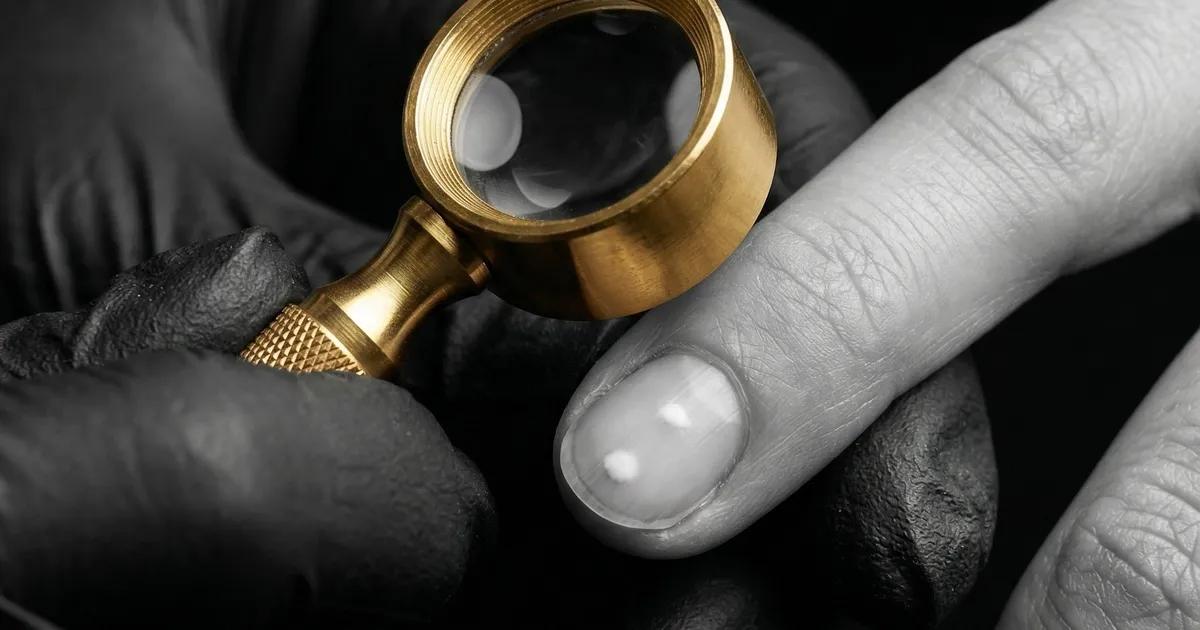
White spots on the nails worry a lot of people, but most of the time they have a simple explanation. Here’s what leukonychia is, what causes it and the signs that mean you should see a doctor.
White spots on the nails are one of the most common questions both at the dermatologist's and in the beauty salon: they appear out of nowhere, they worry people and, in the vast majority of cases, they have a simple explanation. This guide explains what leukonychia is, its most common causes, which visual patterns are worth knowing and when it's time to see a doctor.
What leukonychia is and why white spots appear on the nails
Leukonychia is a nail change in which white areas —spots, dots or bands— appear on the nail plate, either partly or across the whole nail. The word comes from the Greek leukos (white) and onyx (nail). The most common cause is a small knock to the nail matrix —the living tissue that produces the nail— which leads to incomplete keratinisation of the nail cells and leaves areas that are less transparent. In healthy adults, the vast majority of cases of spotted leukonychia are benign and need no medical treatment. A fingernail takes between 6 and 9 months to grow from the matrix to the free edge, so the spots can disappear on their own over that cycle, as long as the original cause has stopped.
The most common causes of white spots on the nails
White spots on the nails fall into four broad groups of causes: mechanical trauma, nutritional deficiency, chemical reaction, and infection or an underlying condition. Spotting the pattern —how many nails are affected, whether the marks are dots or bands, whether they're on the hands or the feet— says a lot before you even see a doctor.
Minor knocks to the nail matrix
These are small knocks or pressure on the nail matrix that disrupt normal keratinisation. They don't hurt at the time —which is why people usually don't remember them— but the spot shows up weeks later, once the affected area has grown out far enough to be visible on the nail. What we see in the treatment room confirms that minor knocks are the most common cause of spotted leukonychia: repeated tapping on a keyboard, accidentally hitting hard surfaces, or tight shoes pressing on the toes are the usual culprits.
Zinc, calcium and other nutrient deficiencies
The popular belief that white spots on the nails mean a lack of calcium is a rather inaccurate myth. The nail plate is made mainly of keratin, not calcium. The nutrient most directly linked to nutritional leukonychia is zinc: zinc deficiency is relatively common and can show up, among other signs, as nail changes. Other deficiencies that may contribute are iron, selenium and B vitamins —especially biotin. A varied diet with pulses, nuts, fish and leafy greens covers these micronutrients in most cases.
Allergic reactions to polishes and chemicals
Repeated contact with the monomers and resins found in gel polishes, acrylic nails in Gandia and removers can trigger a reaction in the nail plate and the matrix. The symptoms don't always include immediate itching or redness; sometimes the only sign is white spots or the nail partly lifting from the nail bed (onycholysis). Our article on gel polish allergy explains in detail how to recognise a chemical reaction and which alternatives exist for sensitive skin. Also available: acrylic nails in Ontinyent.
Fungal infections and underlying conditions
Onychomycosis —a fungal nail infection— can show up as superficial white spots, especially on the toenails. Unlike benign leukonychia, fungal spots usually come with a thickened nail, a crumbly texture and, in some cases, a characteristic smell. Our guide to nail fungus after a manicure goes into the specific warning signs. If you suspect onychomycosis, a lab culture is the most reliable way to confirm the cause, and treatment needs a prescription.
Types of white spots and what each pattern means
Spotted, striate and total leukonychia: the key differences
The three types of leukonychia are told apart by their visual pattern, which points to the likely cause and how concerned you should be:
| Type | Visual pattern | Most likely cause | Severity | What to do |
|---|---|---|---|---|
| Spotted leukonychia | Isolated white dots | Minor knock | Low | Watch it; it usually goes on its own |
| Striate leukonychia | White horizontal bands | Systemic stress, systemic illness, chemotherapy | Medium | See a doctor if there are several or they're symmetrical |
| Total leukonychia | Completely white nail | Systemic illness (liver, kidney) or genetic skin condition | High | Refer to a dermatologist |
Spotted leukonychia is the most common type and usually clears without any treatment. Mees' lines —single horizontal lines linked to chemotherapy or heavy-metal poisoning— are a specific subtype of striate leukonychia that needs urgent medical assessment. Total leukonychia is rare and is usually linked to low albumin levels or nephrotic syndrome.
When to see a dermatologist: warning signs
Most white spots on the nails clear on their own as the nail grows. Some signs, however, call for a dermatology appointment without delay:
- Spots on more than four nails at once, especially in a symmetrical pattern
- White horizontal bands affecting all the nails equally
- Thickening, deformity or lifting of the nail along with the spots
- Other symptoms at the same time: tiredness, unexplained weight loss or changes in skin colour
- A completely white nail with no obvious knock to explain it
- No improvement after a full nail growth cycle
In specialist salons, a trained nail technician can often spot changes in the nail during the appointment and suggest the client sees a doctor. This early detection doesn't replace a clinical diagnosis, but it plays a real part in overall nail health.
How to prevent white spots on the nails
Diet and supplements for healthy nails
A balanced diet is the most effective starting point for preventing nutritional leukonychia. Foods rich in zinc (pumpkin seeds, lean meat, pulses), biotin (eggs, liver, nuts) and iron (spinach, lentils, lean red meat) support healthy keratinisation. Biotin supplements can help people with brittle nails or a confirmed deficiency; however, supplements only make sense after blood tests confirm the deficiency, and your GP should oversee them.
For a complete nail-care routine, our article on natural nail care is a practical guide to diet, moisturising and recommended products.
The right manicure technique and safe removal
Removing gel or acrylics the wrong way is an underrated cause of leukonychia. When the product is forced off —instead of softening it in acetone for as long as it needs— the top layers of the nail come away with it and the matrix cells can be damaged. Our article on full removal and repair manicure explains the safe process step by step. Long-term use of hardeners containing formaldehyde can also cause reactions in the nail that show up as white spots or yellowing; for the latter, our guide to yellow nails after polish gives more context.
Regular manicures in Gandia done with the right technique —gentle filing, no pressure on the cuticle and no pushing the skin around the nail— significantly reduce the risk of knocks caused by the treatment itself. Also available: manicures in Ontinyent.
The role of a professional manicure in nail health
A professional manicure is about more than looks. During the appointment, the beautician checks the overall condition of the nail plate, how hydrated the cuticle is, and whether there are ridges, colour changes or lifting. At our beauty salon in Gandia and our beauty salon in Ontinyent, the nail technicians are trained to spot nail changes and point the client towards a health professional when needed.
At Adrian Beauty Studio, white spots or changes in nail texture are one of the most common reasons clients ask for advice during a manicure.
A plain manicure is especially worthwhile when your nails have white spots: it lets us assess the nail in its natural state, file gently and use moisturising treatments without adding more layers of product. If you've spent a long time wearing gel polish in Gandia or acrylics, you can pair this visit with our guide to recovering weak nails after gel, which sets out a step-by-step recovery plan. Also available: gel polish in Ontinyent.
Keeping an eye on your nails regularly at the salon helps catch nail changes early that might otherwise go unnoticed for months.
Frequently asked questions about white spots on the nails
Do white spots on the nails mean a lack of calcium?
Not directly. The nail plate is made mainly of hard keratin, not calcium, so a lack of this mineral rarely shows up as white spots. The nutrient most linked to nutritional leukonychia is zinc, followed by biotin, iron or selenium deficiencies. To rule out a deficiency, the usual professional advice is to ask your doctor for a blood test with a micronutrient profile; they can interpret it and, if needed, prescribe supplements under supervision. Health professionals don't recommend taking supplements on your own without a diagnosis.
Do white spots on the nails go away on their own?
In most cases, yes. Benign spotted and striate leukonychia disappear as the nail grows and the affected area reaches the free edge. Spots near the base of the nail take longer to go than those in the middle or at the tip. If they're still there after a full nail growth cycle with no visible improvement, see a dermatologist to rule out systemic or infectious causes.
Can gel polish cause white spots?
Yes, although it isn't the most common cause. Repeated contact with certain ingredients —especially the methacrylates in some gel formulas— can cause reactions in the nail if you've become sensitised. Harsh removal with acetone also dries out and weakens the nail, encouraging uneven keratinisation that shows up as white spots or more fragile areas. If you notice changes in your nails after gel polish, our article on gel polish allergy will help you recognise the symptoms and explore safe alternatives.
How long do white spots on the nails take to go?
It depends on where the spot is on the nail and when the cause stopped. Spots near the free edge disappear within a few weeks with normal filing. Those near the base can take several months to reach the tip of the nail. If the cause continues —a repeated knock or an uncorrected deficiency, for example— the spots can come back in the new layers of keratin.
Is it normal to have white spots on the toenails?
It's common, especially if you wear tight shoes or play high-impact sports. On the toenails, repeated pressure on the toes —particularly the big toe and the little toe— causes minor knocks more often than on the hands. That said, fungal infection is also more likely on the toenails; if the white spots come with thickening or a crumbly texture, rule out a fungal infection before putting them down to a simple knock.
Which illnesses can cause white spots on the nails?
Several systemic conditions can show up as leukonychia. The best documented are chronic liver disease, nephrotic syndrome and low albumin levels, which are usually linked to total or striate leukonychia. Nail psoriasis can cause white spots along with pitting (tiny dents) and onycholysis. Some chemotherapy treatments, untreated coeliac disease and heavy-metal poisoning can also affect the nail. In all these cases, the white spots are a secondary sign alongside more specific symptoms of the underlying condition; diagnosis needs a full medical assessment.
If the white spots haven't changed for weeks or come with other changes in the nail, a professional check is the sensible place to start. A plain manicure at Adrian Beauty Studio lets us assess your natural nail and give you personal advice, at our salons in Gandia and Ontinyent.
Quick reference: types of manicure
| Type | How long it lasts | Appointment | Adds length? |
|---|---|---|---|
| Gel polish | 2-4 weeks | 35-45 min | No |
| Gel on natural nails, no extension (formerly “semigel”) | 3-4 weeks | 55 min | No |
| Gel/Polygel with extension | 3-4 weeks | 70-90 min | Yes |
| Acrylics | 3-5 weeks | 80-100 min | Yes |
| OPI polish | 5-7 days | 30 min | No |