Dark spots after waxing: causes, prevention and treatment
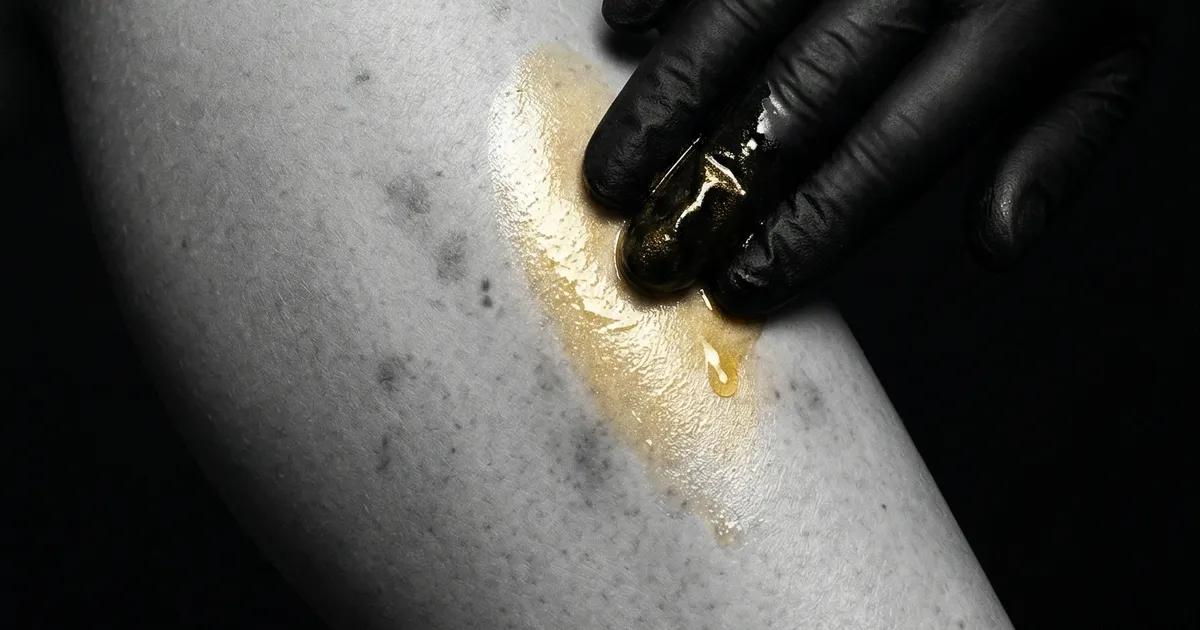
Dark marks after waxing are post-inflammatory hyperpigmentation: the skin makes too much melanin after the small trauma of pulling out the hair. Here is why it happens and how to prevent and fade it.
Post-inflammatory hyperpigmentation (PIH) after waxing in Gandia is a skin response in which the melanocytes produce too much melanin as a reaction to the small physical trauma of pulling out the hair. The result is dark brown or greyish marks that appear between 3 and 21 days after your appointment, especially on the bikini line, underarms and upper lip. Knowing the causes, the risk factors for each skin phototype and the right prevention routine means that, in most cases, you can stop them appearing — or shorten the time they take to fade once they're there. Also available: waxing in Ontinyent.
What post-inflammatory hyperpigmentation from waxing is
Post-inflammatory hyperpigmentation (PIH) is a localised darkening of the skin in response to physical aggression — in this case, pulling hair out with wax. When wax is applied and then removed sharply, it causes a micro-inflammation that over-activates the melanocytes, the cells that make pigment. The result is excess melanin in the epidermis or dermis, visible as brown, greyish-beige or even almost black marks, depending on your skin phototype.
PIH is neither a burn nor a scar, although it can look like either. In most cases it's a reversible pigment response: it takes around 3 to 6 months to fade with active treatment, compared with the 12-24 months it can take with no intervention at all. Identifying it correctly is the first step to treating it well.
Skin phototypes with a higher risk of dark marks
The Fitzpatrick scale classifies skin into 6 phototypes according to baseline melanin and how the skin reacts to the sun. Phototypes IV, V and VI — olive, brown and black skin — are considerably more likely to develop PIH after inflammatory procedures such as waxing.
That doesn't mean fair skin (phototypes I-III) is exempt: it can also mark, although the marks tend to be fainter and fade faster. In higher phototypes, melanin reacts more strongly to any inflammatory trigger, so treatments need more careful technique and a stricter aftercare routine every time.
Temporary marks vs persistent marks
Temporary marks (epidermal hyperpigmentation) appear 24 to 72 hours after waxing, are light brown and stay in the most superficial layers of the skin. They respond well to topical brightening actives within 4 to 8 weeks of consistent use.
Persistent marks (dermal hyperpigmentation) sit in deeper layers and look greyish or bluish. They're harder to treat and need professional input. A Wood's lamp examination, available at dermatology clinics and specialist centres, tells the two apart and completely shapes the treatment plan.
Why dark marks appear after waxing
Dark marks after waxing follow a precise biochemical mechanism. Pulling out the hair causes a micro-injury to the hair follicle and the tissue around it, setting off an inflammatory cascade that releases prostaglandins, histamine and pro-inflammatory cytokines. These signals activate the melanocytes, which then produce more melanin than the skin needs to protect itself. The marks don't show up straight away: they take between 3 and 21 days to become visible, because the melanin needs time to travel from the melanocytes to the surface keratinocytes. That delay is why many people don't connect the mark with the wax they had days earlier. Our complete waxing guide gives more background on the areas most prone to reactions and the methods available.
Melanin and the skin's inflammatory response
Melanin is the natural pigment that protects cellular DNA from UV damage. Normally its production is regulated and evenly spread. Faced with physical aggression, however, the skin's signalling system switches on emergency melanogenesis: excess melanin is produced locally, concentrated at the point of trauma.
Wax grips both the hair and the outer layer of skin and is removed against the direction of growth, causing a mechanical break that the body reads as trauma. Areas with thinner skin and more follicles — bikini line, underarms, upper lip — are especially prone to this exaggerated inflammatory response.
Factors that make post-wax pigmentation worse
Several factors significantly increase the risk of PIH:
- Sun straight after waxing: the first 48-72 hours are the most critical window. Sun exposure during this time can make the resulting mark much more intense.
- Wax that's too hot: wax applied above 42-43°C causes a superficial burn, adding a second inflammatory process on top of the first.
- Skin that hasn't been exfoliated: built-up dead cells make the wax grip harder and increase the trauma of removal.
- Tight clothing after waxing: friction keeps irritating the area and feeds the inflammation for hours.
- Deodorant or perfume straight away: alcohol and fragrance are extra irritants on sensitised skin.
It's worth separating this problem from ingrown hairs, which can also appear on waxed areas but work through a different mechanism. Our article on ingrown hairs after waxing covers that issue specifically.
How to prevent dark marks before and after waxing
Preventing post-inflammatory hyperpigmentation starts before your appointment and carries on for the 72 hours afterwards. Following a three-stage routine — preparation, immediate aftercare and sun protection — greatly reduces the risk of marks, including on phototypes III-V. The therapist chooses the most suitable wax and the right temperature for your phototype and history of reactions. At Adrian Beauty Studio in Gandia and Ontinyent, we start by checking your skin to spot sensitive areas and adapt how we apply and remove the wax to each person, keeping trauma to a minimum.
Preparing your skin before waxing
Whether it's a single area or a full-body wax for women, the 3-5 days beforehand make a real difference to the risk of marks:
- Gentle exfoliation: exfoliate the area 48-72 hours before your appointment (never on the day). It removes dead cells, helps the wax release more easily and reduces trauma.
- Daily moisturising: well-hydrated skin copes better with waxing. Apply moisturiser every night until 24 hours before your appointment.
- Avoid the sun for 3 days beforehand: sunburnt skin is an absolute no for waxing.
- Tell us about active skincare: retinol, AHAs and BHAs make skin more fragile. Your therapist needs to know your routine to adapt the treatment safely.
Immediate aftercare routine
The first 24 hours matter most for keeping the melanocytes calm:
- Apply pure aloe vera gel or an alcohol-free, fragrance-free soothing cream straight after your appointment.
- Avoid hot water — showers, baths, swimming pools — for the first 24 hours.
- Don't scratch or rub the area, even if it itches for a while.
- Wear loose cotton clothing to reduce friction on sensitised skin.
- Don't apply deodorant, perfume or anything with alcohol to the waxed area for the first 24 hours.
For a full, step-by-step recovery routine, our article on waxing aftercare explains each step and how long to wait before going back to each type of product.
Sun protection: the key factor
SPF 50+ is essential for at least 72 hours after waxing, especially on exposed areas such as arms, legs and upper lip. UV radiation directly stimulates the melanocytes, and on skin that's already inflamed, that stimulus can trigger intense pigmentation.
Sun protection is just as important while you're treating marks that have already formed: without SPF 50+ every morning, any brightening product loses its effect because the melanocytes keep getting sun stimulus. In direct sun, reapply every 2 hours.
Professional treatments for dark marks from waxing
Professional treatments for post-inflammatory hyperpigmentation work on two levels at once: they reduce existing melanin and slow down the production of new pigment. At dermatology and medical aesthetics clinics, the usual protocols include superficial chemical peels with glycolic acid (20-30% concentrations), mandelic acid or lactic acid, which speed up cell renewal and lighten the mark gradually over 4-6 sessions spaced 3-4 weeks apart, always with strict sun protection between sessions. Microdermabrasion works well on stubborn epidermal marks: controlled mechanical abrasion removes the pigmented surface layers and stimulates repairing collagen. For deeper dermal marks, intense pulsed light (IPL) or Q-switched laser may be needed and is carried out on medical prescription. At Adrian Beauty Studio we don't do chemical peels, microdermabrasion, IPL or laser: if you need them, we'll point you towards a dermatologist. A full course of treatment usually takes between 2 and 6 months, depending on how deep the pigment is and your phototype. A regular deep facial cleanse also helps keep the skin renewed and more receptive to brightening actives between treatments.
Active ingredients that work on post-wax dark marks
Brightening actives interfere with the pathway that makes melanin, either reducing production or speeding up its removal through cell renewal. The three most used in professional skincare are vitamin C, kojic acid and niacinamide, each with a different mechanism and speed.
Vitamin C (stabilised ascorbate): inhibits tyrosinase, the key enzyme in melanin production, and acts as an antioxidant against post-inflammatory oxidative damage. Effective formulas use ascorbyl glucoside or encapsulated vitamin C to avoid rapid oxidation. Effective concentration: 10-20%. Visible results after 6 to 12 weeks of daily use.
Kojic acid: binds the copper that tyrosinase needs to work. It acts selectively and is particularly effective on marks in phototypes III-IV. It can irritate sensitive skin, so start at 1% and build up gradually. Visible results from 6-10 weeks.
Niacinamide (vitamin B3): unlike the others, it doesn't stop melanin being made but blocks its transfer from the melanocytes to the surface keratinocytes, interrupting the cell-to-cell communication that spreads pigment that's already formed. Very well tolerated, even on reactive skin and higher phototypes. Effective concentrations: 4% to 10%. It's the fastest of the three: visible improvement from 4-6 weeks, which makes it the safest place to start.
Speed comparison: niacinamide (4-6 weeks) > kojic acid (6-10 weeks) > vitamin C (6-12 weeks). That said, combining all three at low doses usually works better than any one alone — always with professional advice, especially if your skin has a history of reactive irritation or you're on medical treatment.
When to see a dermatologist about post-wax marks
Most post-wax marks respond to home care and beauty treatments within a reasonable time. Some situations, however, need a medical opinion:
- The marks haven't improved after 3 months of active treatment with brightening products and daily SPF 50+ without breaks.
- The pigment is an intense blue-grey, a sign of deep dermal hyperpigmentation (dermal melanosis).
- The mark comes with changes in skin texture, crusting, bleeding or an irregular, spreading edge.
- You're taking hormonal contraceptives, anti-epileptic drugs or photosensitising antibiotics, which can make pigmentation significantly worse.
- The area shows signs of secondary infection: marked local heat, discharge, redness that lasts beyond 48 hours.
A dermatologist can prescribe hydroquinone — available in the EU only on prescription — tretinoin, or combinations of azelaic acid + kojic acid + retinol at therapeutic strengths you can't buy over the counter. They can also tell precisely whether the pigmentation is epidermal or dermal, which completely shapes the treatment approach.
FAQs about dark marks and waxing
Why do I get dark marks after waxing?
Dark marks after waxing are post-inflammatory hyperpigmentation (PIH): a skin response in which the melanocytes produce excess melanin as a reaction to the small physical trauma of pulling out the hair. The inflammation caused when the follicle is disturbed over-activates these cells, and the resulting pigment settles in the epidermis or dermis, creating brown or greyish marks. They don't appear instantly: they can take 3 to 21 days to show, which makes it hard to link them to your waxing appointment. Darker phototypes (IV-VI) are more likely to develop PIH, although any skin can be affected if the wax is too hot or you don't protect the area from the sun afterwards. PIH is reversible with the right treatment.
How long do waxing marks take to fade?
It depends on how deep the pigment is and how consistent you are with treatment. Epidermal marks — the most superficial and most common — can fade in 3 to 6 months with daily brightening products (niacinamide, vitamin C, kojic acid) and SPF 50+. With no active treatment, they can take 12 to 24 months or more to clear on their own. Greyish dermal marks need dermatological treatment — chemical peel, IPL or laser — and the process can stretch to 12-18 months. Consistency is the deciding factor: stopping the brightening product or skipping sunscreen restarts active pigmentation. On phototype IV or above, daily SPF 50+ should be kept up indefinitely, even outside treatment periods.
Which cream is good for dark marks from waxing?
There's no single cream that works for everyone: the choice depends on your phototype, how sensitive your skin is and how deep the mark is. The formulas with the best balance of results and tolerance combine three actives: niacinamide at 5-10% (blocks melanin transfer), stabilised vitamin C at 10-15% (inhibits pigment production) and a gentle exfoliant such as 5% lactic acid or mandelic acid (speeds up cell renewal). For sensitive skin or higher phototypes, starting with niacinamide alone and adding the others gradually reduces the risk of irritation, which could make the pigmentation worse. All brightening products must be used with SPF 50+ every morning; without sun protection, they lose their effect. Check with a professional before combining several brightening products, especially if you're on medical treatment.
Does waxing darken the skin permanently?
In most cases, no. Post-inflammatory hyperpigmentation is a temporary, reversible response, although it can take a long time to fade without treatment. What creates the impression of permanent darkening is repeated waxing without proper aftercare: each session without sun protection afterwards can add a new layer of pigment on top of the last, building up marks that are more intense and harder to treat. With the right routine — exfoliating beforehand, wax at the right temperature applied by a professional therapist, a soothing product straight afterwards and SPF 50+ for the following 72 hours — the risk of persistent pigmentation is very low, even on phototypes IV-VI. The key is consistent prevention at every appointment, not treating marks once they've set in.
Can I prevent dark marks if I have darker skin?
Yes — prevention works, even on phototypes IV, V and VI, which are the most prone to PIH. The most important steps are: going to a salon experienced with darker skin and adapted techniques — controlled wax temperature, a removal technique that keeps trauma to a minimum — gently exfoliating the area 48 hours beforehand, applying aloe vera or an alcohol-free soothing cream straight afterwards, and using SPF 50+ for the next 72 hours. Adding 5% niacinamide to your daily routine as a preventive measure — not only once marks appear — significantly reduces the melanocyte response to repeated physical aggression. Your therapist may recommend using brightening actives in the days before and after each appointment, especially on high-risk areas such as the bikini line or underarms.
Is cold wax or hot wax better for avoiding dark marks?
Professional hot wax, applied correctly, causes less removal trauma than cold wax on most areas of the body, which means a lower risk of PIH. Hot wax is applied at 37-40°C and grips the hair more selectively than the skin, reducing tension as it's removed and allowing a more precise pull. Cold wax tends to stick harder to the skin, creates more tension when it comes off and can cause more micro-trauma each time. However, hot wax at the wrong temperature — above 42-43°C — is the main cause of superficial burns and the pigmentation that follows. That's why the therapist's technique and careful temperature control matter more than the type of wax itself. On sensitive areas such as the bikini line, upper lip or underarms, professional-quality hot wax is the recommended option.
A full-body wax at a professional salon isn't only about looks: technique, the product used and the aftercare routine make the difference between skin with no issues and skin that builds up marks appointment after appointment. If you tend to get pigmentation after waxing, the most effective approach is to work with a team that knows your phototype and adapts every appointment to you.
To check availability and book, visit our salon in Gandia or Adrian Beauty Studio in Ontinyent.
Quick reference: waxing
| Area | Session | Lasts | Pain (1-5) |
|---|---|---|---|
| Classic bikini line | 10-15 min | 3-5 wks | 3-4 |
| Underarms | 10 min | 3-4 wks | 3 |
| Half legs | 15 min | 3-5 wks | 2-3 |
| Upper lip | 5 min | 2-3 wks | 3 |
| Eyebrows | 10 min | 3-4 wks | 2-3 |
| Back | 25 min | 4-5 wks | 3 |